Tuesday, October 31, 2006

Hexayurt

SurviveLA reader jbjhill, responding to our rant about designing for a world dominated by 4 x 8 building materials, sent a link to this unique yurt-shaped emergency shelter which can be built out of 4 x 8 sheets of nearly anything (the globe shaped thing on the right is an inflatable satellite dish). Designed by software engineer Vinay Gupta, who is working on this project full time, the "Hexayurt" costs somewhere between $200 and $500 to build, and requires only six cuts for each unit. The Hexayurt stacks flat for easy deployment in emergencies.

Gupta has a suggested "Infrastructure Package" which includes heat, lights, water purification, and a composting toilet bringing the cost up somewhat, but still much less than FEMA's $30,000 trailers.

While not the most thrilling video (at least as compared to this), thanks to the wonders of youtube you can watch Gupta assemble an 8 foot Hexayurt:

Saturday, October 28, 2006

Street Signs and Solar Ovens

If SurviveLA put together a museum show it would, pretty much, look like an exhibit currently at the Craft and Folk Art Museum entitled "Street Signs and Solar Ovens: Socialcraft in Los Angeles" which is on view until December 31st. Curated by the Journal of Aesthetics and Protest, this timely show focuses on objects that demonstrate creative, low-tech solutions to the environmental and political mess we find ourselves in.

We were particularly struck by the display case full of soda cans transformed by LA survivalist Christopher Nyerges into a variety of uses including lamps and stoves (see SurviveLA's earlier post on creating a Pepsi can stove). Nyerges also contributed two improvised solar ovens, one made out of a discarded pizza box.

Other highlights include a functioning still by Alison Wiese, the stunning knitted clothing of Lisa Auerbach, items from the Path to Freedom urban homestead and contributions from the fine folks at C.I.C.L.E.

So, get on your bike, head down to the Craft and Folk Art Museum, and see this provocative show!

Craft and Folk Art Museum Hours:
Tuesday, Wednesday, Friday 11am - 5pm
Thursday 11am - 7pm
Saturday-Sunday 12pm - 6pm

Museum Admissions:
$5.00 adults
$3.00 students/seniors
Free for children 12 and under
Free admission on the first Wednesday of every month.

Location:
5814 Wilshire Boulevard
Los Angeles, CA 90036

Friday, October 27, 2006

Kent's Composting Tips and Secret Weapon

Today in our continuing dialog on composting, a guest post from Los Angeles Bicycle Coalition board member, Kent Strumpell who we met up with at this week's inspiring LACBC awards gala:

I’m sure there are more correct procedures, but this is what I’ve found works.

I use a compost bin that has direct soil contact. I think this allows the introduction of soil organisms and serves to drain the pile if it gets too wet. I’ve done this same process with free standing piles as well.

I start with a small pile of dry leaves and add a load of kitchen scraps. I also add a couple shovels-full of rich soil to get things started, particularly with some worms and bugs to propagate the new pile. I’m not fastidious about what goes in, so the occasional fish and chicken scraps and leftover cat food gets into the mix, even oily stuff, but mostly it’s the usual veggies, fruits, paper napkins, etc. Though experts say no fats should go in, I’ve yet to see (or smell) a problem.

Each time I add new kitchen scraps, I add 1-2 shovels-full of dry leaves and some water if needed, turning and mixing the old and new stuff with a cultivator or shovel to aerate the pile. The proportion of dry to wet material is important. There should be enough dry leaves so the compost is kinda’ fluffy and moist, not soggy, but the dry material shouldn’t overwhelm the wet either.

Now the secret. I cut a piece of black 6 mil vinyl to approximately cover the pile and lay this directly on top of the compost (anything similar will work). I’ve found this helps keep the pile moist when I’m not able to check on it (sometimes for a week or two) and the bugs and worms seem to thrive underneath this membrane. I got the idea after noticing that I’d find rich bug habitat under boards, etc. laying around my yard. My compost piles teem with worms, sow bugs and other critters, all working hard for me. If you do a free standing compost pile, cut the plastic big enough to cover to the ground and hold it in place with rocks or bricks.

I add my scraps about once or twice a week. I don’t use the pile to consume large quantities of leaves, I just add enough of them to keep things in balance. It easily keeps up with my kitchen scrap production and gives me a rich, dark compost about like coffee grounds when it is done. I draw finished stuff off at the bottom occasionally. Or, if I want to use the whole batch, I stop adding to it for a few weeks so it can digest everything.

Thursday, October 26, 2006

Build Your Own Furniture

We live in a 4 by 8 world. This is why we can't get all that excited about things like geodesic domes, straw bale and rammed earth houses. All of these innovative architectural ideas may have great potential, but when it comes time to buy supplies at the lumber yard, the overly creative builder will soon realize the difficulty of utopian designs in a world of 4 by 8 sheets of plywood and drywall. That geodesic shape is hip, but what do you do with the rest of the plywood sheet once you cut it out?

The same limitation applies to making furniture. Thankfully a generation of designers back in the 60s and 70s left a few highly useful and groovy how-to books on making your own suburban-workshop-modernist furniture with a humble 4 x 8 sheet of plywood. The amazing art/architecture collective Simparch tipped us off to the world of plywood modernism how-to books and we at Homegrown Evolution recommend the stunning Sunset Magazine produced Furniture You Can Build, which is sadly way out of print and very expensive on Amazon, but available at the L.A. Public Library. Most of the designs in this book would work well with found materials and scraps. What we appreciate most about this book and others like it, that we will discuss in future posts, is the economical use of common materials.

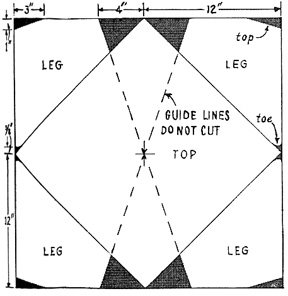
A good example of this efficiency are these handsome stools -- one sheet of plywood will make eight stools. Here are the instructions from the Sunset book:
Simple, versatile, and inexpensive -- that's the quickest way to summarize the virtues of these handy plywood stools, They could hardly be easier to build and are surprisingly inexpensive. Except for the nails and glue, every part of the eight stools shown in the picture at the top left came from one standard 4 by 8-foot panel of 1/2-inch plywood, the same as the panel shown behind them. As the cutting pattern shows, a 2-foot square of plywood yields one stool, and only the shaded areas are wasted.
Each stool is 17 inches square and stands approximately 10 1/2 inches high. If you wish to use a cushion, you can glue and nail a 1/2 by 1-inch hardwood frame around the top's edges, which will give a 1/2-inch high rim to keep the cushion in place.
To start, draw the cutting pattern carefully on heavy paper and transfer it to each 2-foot plywood square with carbon paper or pin pricks. If making several stools, you can have the lumber yard cut your plywood to uniform 2-foot squares. Cut the legs and top from each square with a saw.
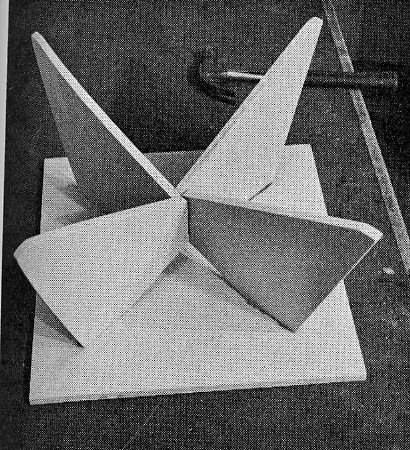
As the underside view shows, each leg abuts on and is nailed to the inner end of the next leg. Assemble with glue and just two 4-penny nails in each leg. Before the glue dries, turn the assembled legs right side up on a smooth surface and attach the top, As you glue and nail on the top (use 6-penny finishing nails), the legs will level themselves evenly. Finish the stools as you prefer: with paint, varnish, or stain wax.

Wednesday, October 25, 2006

Bitter Greens

Today we continued our winter planting in our illegal parkway garden adding arugula, a green that America has suddenly discovered after last month's factory farming spinach nightmare. We also added a tough and bitter leaf chicory from our friends at Grow Italian. Hopefully, by succession planting we should have a winter and spring full of green, if somewhat bitter vegetables.

How do we prepare these bitter greens around the compound? Very simply -- in a pan with garlic, olive oil, salt, and pepper. Sometimes we add some Parmigiano Reggiano. Fresh, strong tasting vegetables don't need much else.

Monday, October 23, 2006

Getting Out

Walking back from our run this morning, we noticed a black mushroom cloud spreading out above our neighborhood, causing SurviveLA to briefly ponder the possibility that we might have to get the hell out of our beloved hometown. It turned out to be just your average hay truck fire on the 101 freeway, meaning there was no need to saddle up the Xtracycle for a long distance human powered escape.

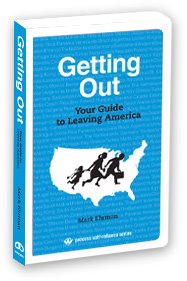
Thankfully, if we did have to get the hell out we now have a handy guidebook. The fine folks at Process Media, publishers of Preparedness Now have just released a sequel for those who choose to run rather than prepare called Getting Out, Your Guide to Leaving America. We completely understand the sentiment of wanting to get the hell out of this proto-fascist banana republic we live in and we endorse this book for those who don't want to hunker down and do the homestead thing. SurviveLA even has a former colleague in Chanai India who got out of the US several years ago and now has an interesting job and his own ultra low-cost homestead.

Despite the allure of more exotic places, Survive LA has decided to stay put and it's time to get to work!

Sunday, October 22, 2006

The Boy Scouts Suck


SurviveLA did not get a wink of sleep last night while staying in the Joshua Tree National Park campground due to a bunch of Boy Scout dads who stayed up talking and laughing until 2:30 am in spite of the presence of dozens of other nearby campers. Thanks Boy Scout dads for setting a nice example for your kids, some of whom also stayed up until 2:30 engaged in a loud multi-player game boy tournament while others chased desert mice, and a special thanks to the Scout who accidentally kicked out the supports of our tent at midnight causing it to collapse upon us.

While we applaud the dads for getting the kids out in the wilderness for the weekend, we at SurviveLA just can't get behind the vile and outdated Boy Scouts, whose ongoing attempts at being more relevant backfire so pitiably and whose founder, Robert Baden-Powell, was an anti-semitic, fascist, pedophile.

If we had kids around the SurviveLA compound, in keeping with our self-sufficiency goals, we'd form our own SuriviveLA Scout troop. Here's how the SurviveLA Scouts would differ from the Boys Scouts:

1. SurviveLA Scouts are coed. Men and women have gotta learn to work together and you might as well start early. As Barbara Ehrenreich once said, "Men alone in groups are bad company". It's also no fair that the girls have got to whore themselves selling cookies.

2. Let's teach our kids to make the world a better place without the Norman Rockwell fascist veneer.

3. Hipper uniforms. We suggest something like this.

4. An urban cycling merit badge.

5. All activities are outdoors. Lots of nature experiences. No computer merit badges and certainly no copyright merit badges.

6. Lastly, the SurviveLA Scout mission statement, borrowed from Edward Abbey:
One final paragraph of advice: Do not burn yourself out. Be as I am-a reluctant enthusiast... a part time crusader, a half-hearted fanatic. Save the other half of yourselves and your lives for pleasure and adventure. It is not enough to fight for the land; it is even more important to enjoy it. While you can. While it is still there. So get out there and mess around with your friends, ramble out yonder and explore the forests, encounter the grizz, climb the mountains. Run the rivers, breathe deep of that yet sweet and lucid air, sit quietly for a while and contemplate the precious stillness, that lovely, mysterious and awesome space. Enjoy yourselves, keep your brain in your head and your head firmly attached to your body, the body active and alive, and I promise you this much: I promise you this one sweet victory over our enemies, over those deskbound people with their hearts in a safe deposit box and their eyes hypnotized by desk calculators. I promise you this: you will outlive the bastards.

Saturday, October 21, 2006

Roughin' It

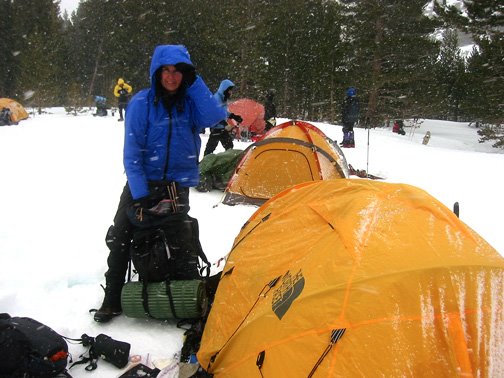
SurviveLA is off to Joshua Tree this weekend for the graduation ceremonies of the Sierra Club's Wilderness Travel Course. We took the WTC class earlier this year both for tips on backpacking and for gaining general self-sufficiency. The Sierra Club's approach to roughing it is to, well, not really rough it but to go down to REI and load up on all the latest stoves, tents and "technical" fabrics. This contrasts starkly with the mountain-man-live-off-the-land approach epitomized by survivalist types like Christopher Nyerges and Eustace Conway.

At SurviveLA we like our comfort and believe that the best way to train for a survival situation is to studiously avoid survival situations by making sure to always have extra food, extra water, extra clothes, a map and a compass. In short, we like the WTC way. And the nice thing about having the backpacking gear around is that should an earthquake or other disaster strike our urban compound we are prepared to camp out in the backyard and, if necessary, head out on the Xtracycle.

The Wilderness Travel Course starts up this January and we highly recommend it. The class includes ten classroom sessions, two day trips, and two overnight trips all for a very reasonable price. The class ends with a challenging weekend of snow camping in the high Sierras. Take this class and your urban homestead will be ready for most contingencies.

And speaking of camping, the velorutionaries at C.I.C.L.E. are hosting a weekend camping trip on November 11-12 that will feature a wild food hike with the aforementioned LA survivalist Christopher Nyerges.

Thursday, October 19, 2006

Suntracker

Brief linkage today. While Homegrown Revolution doesn't like to overdo the technology thing, we think this natural light collecting skylight device called the Suntracker One has promise. Similar in principle to the Solatube, the Suntracker, as the name implies, has an additional feature that the Solatube lacks -- it tracks the sun with a built-in electronic brain and mirrors. Both the Solatube and the Suntracker direct the light down a tube, thus replacing the heinous blocks of fluorescent fixtures that typically light most commercial buildings with a more aesthetically pleasing natural light. Solatubes are available for residential use, but the Suntracker is oriented towards larger commercial applications.

Tuesday, October 17, 2006

LED Light Bulbs

The geeks over at BoingBoing have jumped on the LED light bandwagon with a post about the C. Crane Company's CC Vivid and CC Vivid+ LED light bulbs. While it's great that folks are beginning to think about conservation, it's disappointing that this interest seems to be about chasing the latest new techno-gadget. As concerns about impending climate and ecological disaster increase, it's prudent to greet all new technical solutions with skepticism. After all, why replace one kind of over-consumption with a new "green" consumerism?

Now back to the topic of LED lights. The price of LED lights continues to fall as the their light output increases. However the technology, in SurviveLA's opinion, is not quite ready for general lighting applications. One way to measure efficiency of light bulbs is a ratio between the light output measured in lumens and power usage measured in watts. Most compact fluorescents have a lumens to watts ratio of about 50 lumens per watt. The CC Vivid light lumens to watts ratio is 24 and the CC Vivid+ ratio is 34 according to the specifications we obtained from the C. Crane Company web site. The spotlight profiled by BoingBoing, which we assume is also the C. Crane spotlight also has a lumens to watts ratio of 34. For more on these issues see the Department of Energy's FAQ on LEDs.

As the DOE notes in the FAQ, it's not entirely fair to directly compare compact fluorescents to LED lights, since LED bulbs have a more directed light making them perhaps better for applications such as bedside reading lights, where you don't want to bother a dozing partner. LEDs, due to their exceptionally long life -- upwards of 60,000 hours -- are also great for installation in hard to reach locations where the lights will be on continuously.

LED lights, however, still bust the wallet with their high price. This issue reminds us of all the yuppies in our 'hood tooling around in their expensive new Toyota Priuses. It's 19th century technology, but a bicycle is still a hell of lot more efficient . . .

Monday, October 16, 2006

Far Side of the Stairs

The folks over at SoapboxLA have tossed down the stair climbing gauntlet with their participation in this weekend's alley cat race and fundraiser for injured bike messenger Orlando Godoy. The race, entitled "Thus Climbed Zarathustra" in honor of Nietzsche's birthday involved miles of racing around Echo Park and Silver Lake interspersed with climbs of the region's many horrendous staircases. SurviveLA had important business to attend to and was not able to attend, though even if we had been free the idea of combining "alley-cat" with our "middle-age" we feared might lead to a trip to the "emergency-room". But the brave folks at SoapboxLA were clearly up to the challenge and took first place in the categories of non-crocodile wrestling Australian and fiery high-horse Hungarian.

But seriously, part of this urban homesteading thing is about whipping our communities into shape and LA needs a serious thrashing, and I don't mean the sort delivered by the ladies in the back of the LA Weekly. We need to make LA a walkable, bike-able and livable place just like the folks in the other great cities of the world have done. Why is it that LA suffers from low self-esteem and low expectations? Why is it that when our downtown skyline appears in a movie, the image is shorthand for crime infested ghetto hell-hole? Why is it that when you point out the pedestrian and cycling amenities of cities like Portland and San Francisco the immediate response is, "that will never work in LA"?

We urge all revolutionaries out there to join with SoapboxLA to call our city officials on their complacency and make this city a great place to live. SoapboxLA had an important victory in helping insure bicycle and pedestrian access to the Griffith Observatory and they are also fighting for a safer bike lanes on the soon to be constructed Santa Monica Boulevard Transit Parkway. Brothers and sisters, it's time to saddle up the high-horses and ride off with the Soapboxers!

Friday, October 13, 2006

The Green Cone

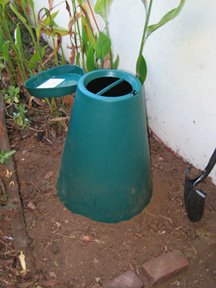
SurviveLA contributor and neo-country singer Corey Travis, currently on tour with his band in London, Malta, and Tunisia, sends us word of a "kitchen waste eliminator" called the Green Cone, that he bought after seeing a review in that modernist porn magazine Dwell. The cone part of the Green Cone sits on top of a basket buried in the ground. You put your kitchen waste in the cone, add some "accelerator powder" provided by the company, and let the waste dissolve into the ground. The system is similar to dog waste disposal products such as the "Doggie Dooley" and is basically a primitive septic tank, that turns solid waste into liquids which then, if all goes well, percolate into the soil.

The Green Cone, supposedly digests all kitchen waste including meat, fish, bones, animal waste, and dairy products, items not recommended in most compost piles due to the fact that they smell bad while decomposing, attract pests, and could possibly transmit Salmonella and E. coli bacteria if used on food crops. The green cone is, however, not a composter and the end result should not be used as garden compost due to the fact that home compost piles usually can't generate enough heat to kill the bad bacteria in meat and animal waste. For the reasons you shouldn't put meat products in compost piles check out the excellent composting safety tips found at the Colorado State University Cooperative Extension.

The Green Cone could work as a good solution for folks who don't have much of a garden, have access to a small bit of soil, and want to lesson the amount of waste going to the landfill. The key thing will be to see how well the waste dissolves, since most septic systems have to be pumped out occasionally. We're also curious to see if any bad smells or critters manage to break into the cone. Once again the Green Cone is a septic system and not a solution for anyone who wants to create compost for a food garden.

Lastly, we don't know if this will work in a Green Cone, but a town in Sweden has an even more advanced waste disposal plan, which involves a new kind of funeral rite, where bodies are freeze-dried, ground up and spread on trees as compost.

Wednesday, October 11, 2006

Homegrown Evolution Food Review: Backpacker's Pantry Huevos Rancheros

On our recent Homegrown Evolution journey to Santa Rosa Island we taste tested another freeze-dried food item, Huevos Rancheros from Backpacker's Pantry. While this product has an impressive shelf life and ease of preparation, making it appropriate for emergency food supplies, we've had better freeze dried entrees. Our fellow campers had the same reaction to the visual look of the cooked and re-hydrated product: dog vomit. The taste wasn't all that bad, but it had the overly salty and questionably seasoned feeling of almost all dehydrated foods. Imagine eating just the seasoning packet from a bowl of ramen. We've had much better luck with some home made foods that we'll share in future posts.

And, perhaps this is a cheap shot, but Backpacker's Pantry has really got to consider redesigning the package which has a sort of rear view of a llama in an Andean landscape. The marketing folks probably want us to have the feeling of, "wow, isn't this food great - now I can take a hacky-sack break on my high altitude Peruvian trek" rather than "so that's what end of the animal this food comes from."

Monday, October 09, 2006

Beads and Roman Sandals Won't Be Seen

I wouldn't wear a tie-dyed tee shirt unless it was dyed with the urine of Phil Collins and the blood of Jerry Garcia." - Kurt Cobain

After installing the new herb spiral in the backyard a certain member of the SurviveLA compound, commenting on the design, remarked facetiously, "Welcome home brother." For those not in the know, that particular phrase is the greeting at any event sponsored by the Rainbow Family of Light, a group of hippies that have met each year in a different state for the annual "Rainbow Gathering" ever since 1972.

Now the topic of hippies is controversial around the SurviveLA compound, but first things first -- we ain't hippies. In fact at every hippie thing we've been to, including the Rainbow Gathering in Arizona in 1998 (along with art critic and thoughtstylist Doug Harvey), we always hear the word "narc" whispered behind our backs probably due to our short hair and white-bread appearance. But, the fact is we love hippies despite the lentil-filled coolers, naked yoga, dream catchers and tie-dye. We're all trying to make the world a better place, after all.

It's curious though, that when you grow your own vegetables and don't buy into some of the other crap our ever-present consumer culture demands of us somehow you automatically get labeled a hippie. While sadly the original hippie movement went astray, we "dig" the new and more pragmatic kind of hippie stuff happening over at Arthur Magazine. Besides, in the end, we're all untied against the "Man".

Somehow this long winded rant leads us back to the creation of the herb spiral which replaced an overgrown patch of lavender. Built with concrete salvaged from some recent demolition work the spiral also has a set of bamboo poles in the center to grow pole beans in the winter and tomatoes in the summer. The concrete spiral functions as a path to pick the herbs which include thyme, sage, chives, garic chives, tarragon, and chamomile. Our design is a modification of the permacultural herb spiral which is essentially a mound. In the permaculture version the water hungry plants are placed at the bottom of the mound and the dry plants at the top, the idea being that the water collects towards the bottom of the mound shaped spiral. We didn't do the mound thing out of laziness and a lack of materials, and because the herbs we planted don't require much water anyways.

As for the spiral shape itself, we'd like to think that it's our little tribute to Robert Smithson, more than Jerry Garcia.

Saturday, October 07, 2006

Shamelessly Tooting Our Own Horn

Unfortunately for the sedentary out there this new urban homesteading lifestyle involves a fair amount of physical fitness. We've found that the best way to keep up with SurviveLA's strenuous fitness requirements is to have a goal such as a race, or a particularly difficult hike. This is why we've been obsessed over the years with the Ketchum Downtown YMCA's oddball Stair Climb to the Top which involves a heart-pounding and vomit-inducing journey up 75 floors via the stairwell of the US Bank Tower, the tallest building west of the Mississippi.

We're proud to announce that today one of the SurviveLA clan took second place in the slightly-over-the-hill division with a time of 12:09 (missing the gold by two seconds). Our reward is the ugly medal you see here, the fact that the race proceeds benefited the community programs of the YMCA, and the knowledge that should the shit hit the fan in downtown LA, we can beat the crowds to the heliport.

SurviveLA was too obsessed with winning to document the journey, but the enterprising folks at Metroblogging LA managed to haul a video camera up the stuffy staircase.

Thursday, October 05, 2006

Essential System #3 - Sew Your Own Damn Clothes

Working down the list of essential systems that we began in an earlier post, we get to the topic of clothes. Now we could talk about layering and all the new "technical" fabrics, but that's just about going to REI and busting out the credit card -- not very interesting.

The problem with laying down the credit card at any or our nation's retail clothing establishments is the simple fact that when you get home you have to wash off the blood of the Chinese slave laborers who sew the shit. There are two possible solutions to this moral dilemma, shopping at thrift stores, in which case you have second-hand slave laborer blood and sewing your own clothes. The big problem with the latter solution is that sewing is a bitch -- it's time consuming and at times incredibly frustrating. Nevertheless this homesteading revolution we propose won't be a cake walk, and will be as much about rediscovering old techniques as it will be about new technologies. Fellow crackpot Daniel Pinchbeck in his funky new book The Return of Quetzalcoatl says,
Instead of envisioning an ultimately boring technological singularity, we might be better served by considering an evolution of technique, of skillful means, aimed at this world, as it is now. Technology might find its proper place in our lives if we experienced such a shift in perspective--in a society oriented around technique, we might find that we desired far less gadgetry. We might start to prefer slowness to speed, subtlety and complexity to products aimed at standardized mind. Rather than projecting the spiritual quest and the search for the good life onto futuristic A.I.s we could actually take the time to fulfill those goals, here and now, in the present company of our friends and lovers.
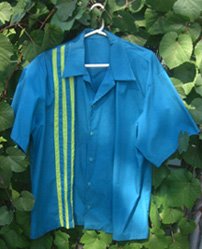
In short it's time to step away from the virtual world of the computer for a few evenings every month and fire up the very non-virtual Singer sewing machine. We did this a few years ago and managed to produce the rather unattractive and two sizes too big shirt that you see above. It's the kind of shirt that when worn will often get the comment, "did you . . . sew that yourself?" Note that this is not a compliment.

Still, we think that sewing has promise, particularly in Los Angeles where every imaginable fabric can be found in the colossal fabric district (unless, of course you decide to take truly radical action and start spinning and weaving your own fabric). Some recommendations for brave urban homesteaders who want to take up sewing. Don't start with stretchy fabric. Don't even think of using velvet (we learned this the hard way). Choose patterns carefully so you don't end up looking like, well, folks who sew their own clothes. Consider purchasing a used serger, which cuts the fabric and finishes the seam all at once, which folks in the know tell us makes life considerably easier. Dress forms can also help - here's how you can make one yourself.

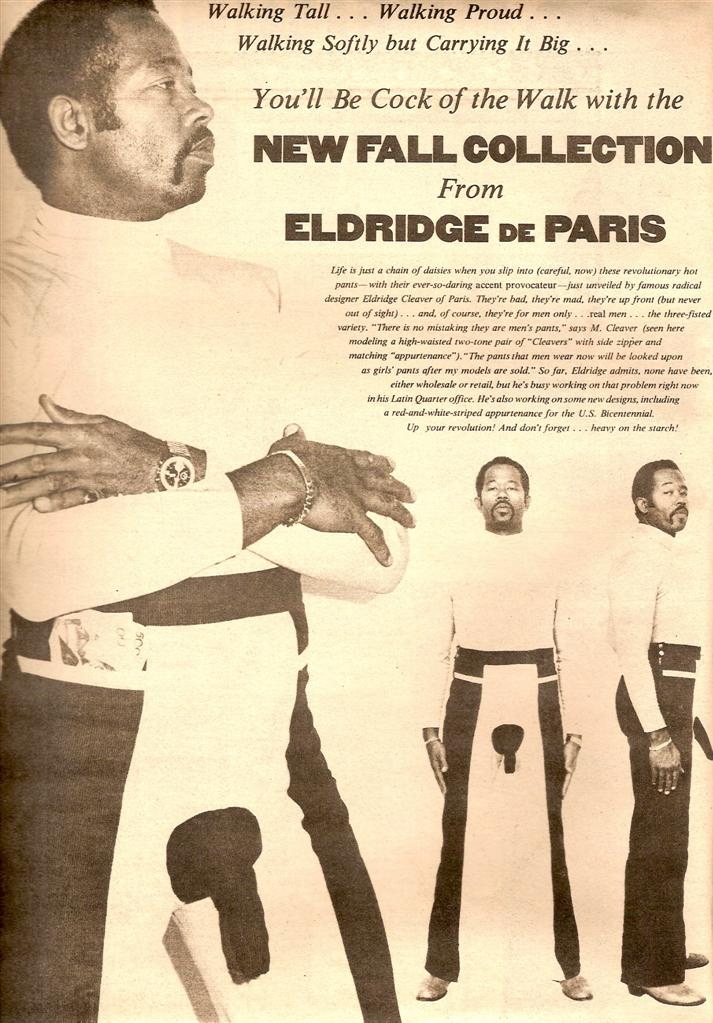
Most importantly we need to reclaim sewing from the old ladies of the Midwest and make it . . . revolutionary. We think the best way to jump start this new sewing revolution would be to bring back brother Eldridge's radical "Cleavers".

Monday, October 02, 2006

Parkway Plantings

The cow dookie in the spinach scandal of the past month (for more on that read this excellent article) should prompt everyone to consider planting your own garden.

Hopefully Homegrown Evolution won't be buying any bagged vegetables this winter since we just planted our parkway garden this afternoon after installing a drip irrigation system (more on the drip system in a later post). Winter is the best growing season for vegetables here in Los Angeles, and now is the time to start planting.

Our parkway garden consists of two 1.8 x 1.8 meter raised beds with a central wire frame obelisk in each bed to support beans. We ordered all of our seeds this winter from Seeds from Italy and have begun succession planting seeds every two weeks.

North Bed as of October 2, 2006

In the north bed we have:

Broccoli Rabe - Cima di Rapa Novantina, which matures in 55 to 80 days and Cima di Rapa Quarantina, which matures in 32 to 35 days. Broccoli is somewhat difficult to grow and requires vigilance to keep pests under control, and frequent fertilizer applications (organic, of course). The faster growing Quarantina, is easier to grow since the crop is produced faster and bugs have less time to munch on it. We grew both of these varieties last year and marveled at the taste of fresh broccoli, which is nothing like the bland crap in our supermarkets.

Cauliflower - Cavolfiore di Sicilia Violetto. This purple Sicilian cauliflower is stunning and tasty. Again, far superior to the tasteless white stuff our country's factory farms crank out.

Beets - Bietola da Orto Cylindra. We actually like the leaves better than the roots and this variety is supposed to produce a nice beet green.

Radicchio Rossa di Treviso. Homegrown Evolution has yet to produce decent radicchio. We're giving it another try this winter.

South Bed as of October 2, 2006

In the south bed:

Agretti - a trendy vegetable with some blue state types. We've never had it, probably because we don't haunt expensive Italian eateries in the yoga mat totin' and Lexus drivin' sectors of our fair metropolis. We suspect that Agretti is going to be extremely bitter, just like the Italian dandelion greens we grew a few years back. You cook these bitter greens in olive oil and garlic and you get used to the strong taste. It's a reminder that the bastards who control what passes for agriculture in this country have taken all the flavor out of our vegetables.

Rapa da Foglia senza Testa, i.e. rabe without a head. Yet another bitter vegetable, this is a kind of turnip green that looks kind of like broccoli rabe, except that you eat the leaves. A bit susceptible to bugs, but we had a successful crop last year.

Carrots - Carota Pariser Market. This is a small round carrot that French folks apparently like.

Around the wire obelisks, that give our street garden a certain gravitas in addition to supporting climbing plants, we have planted a very exotic looking bean called Borlotto lingua di Fuoco or "Tongue of Fire" (a reference to Pentecost we suspect rather than the cheesy 1970s Italian thriller). This is a pole bean with a brilliant red color that, sadly, disappears after cooking.

One of the nice things about planting the seeds in our street garden this afternoon was chatting with the folks who come by. Sadly, we found out that one neighbor is breaking up with his wife and needs to find an apartment. But on a happier note, another neighbor reminisced about his Italian grandfather who grew lots of vegetables and even made his own wine in the Bronx. Hmm, wine . . .

Sunday, October 01, 2006

Life Can Be So Car Free

SurviveLA headed out on our Xtracycle sports utility bike yesterday to help the velorutionaries over at C.I.C.L.E. carry swag and propaganda to the new Los Angeles State Historic Park (formerly the Not a Cornfield site) for the first annual happening, Life Can Be So Car Free. We were pretty impressed with our ability to use human power to carry stuff until we were put to shame by one of members of the band Telematique who arrived pulling a bike trailer with a home-welded tall bike!

Speaking of moving stuff with bikes, for those who missed the fantastic Life Can Be So Car Free, here's a video from groovy Portland that was shown last night.