Showing posts with label pirate gardening. Show all posts
Friday, July 30, 2010
Foreclosure Garden Foreclosed
Neighbor, artist and master gardener Anne Hars took over the front yard of a foreclosed triplex earlier this year and planted a vegetable garden. The triplex had fallen in to disrepair and had become notorious for housing a bunch of gang members. The police evicted the gangsters and the building fell into disrepair.
The garden Anne planted in the spring had just begun to bring forth its bounty.
Then, this past week, an unpleasant man showed up claiming to work for Bank of America.
That was the end of the garden.
As Anne put it, "this is how the banks take care of their property..."
Read the whole saga on Anne's blog, theforeclosuregarden.blogspot.com.
Labels:
pirate gardening,
vegetable gardening
Thursday, July 23, 2009
World's Skinniest Farm Planted in Brookline, MA
From 200footgarden.blogspot.com:
"The 200 Foot Garden is a community garden/art project, to create a commuter garden in Brookline, Massachusetts. Our hope is to add some beauty and delight to a very everyday stretch of sidewalk and chain-link fence. It's also our hope to remind people that healthy vegetables can be grown in all sorts of environments, not just farms or big yards or community garden plots. The 200 Foot Garden is also a way to bring together neighbors in a project designed to share good things with the people around us.
The project is headed by Patrick and Tracy Gabridge. In our everyday lives, Patrick is a novelist and playwright, and Tracy is a librarian."
Labels:
pirate gardening
Tuesday, November 04, 2008
Action!
To those frustrated with national or even local politics, I say just get out there and do something. In the words of London's guerrilla gardener and author Richard Reynolds, "The point at which I became a guerrilla gardener is when I realized that I would get a lot more accomplished by just getting out there and doing it than phoning up the council and complaining about the landscape all around me." So skip those endless returns and watch a mini-doc of one of Reynold's actions:
Via City Farmer News.
Labels:
pirate gardening
Thursday, July 10, 2008
Boulder man faces $2000 fine/day for guerilla garden fencing
Via BoingBoing (complete with video):
"[L]ast month, an enforcement officer from Boulder’s Environmental and Zoning Enforcement office showed up and said a neighbor had complained about the garden.Myself and three other neighbors here in my Los Angeles neighborhood are doing exactly the same parkway vegetable planting Hoffenberg is doing. All it takes is one disgruntled and unhappy neighbor. We gotta change the paradigm folks--food not lawns!“She said to take it all down — the tomato cages, the trellises, the posts, the basketball hoop, everything,” Hoffenberg said.
...
Hoffenberg has until July 14 to take down the trellises and fencing. At that point, Arthur said, he could be cited, and a judge could impose a fine. Or the city could remove the impediments, since they’re on public property, Arthur said, if they’re not able to reach a compromise."
Labels:
pirate gardening
Monday, June 02, 2008
Garlic!
Our parkway guerrilla garden, profiled in last week's Los Angeles Times article, which is now linked on BoingBoing, yielded up an impressive garlic harvest this season.Garlic is one of the easiest crops for us to grow here in Southern California. You just take the large, outer ring of cloves from store-bought garlic and stick them in the ground with the pointed side up interspersed throughout your other plantings--wherever you have some room. We plant them around Thanksgiving and harvest in late May/early June when the stalks begin to turn brown and fall over. After you harvest your garlic, don't wash it just knock the dirt off, then let it "cure" with the stalks and roots intact in a dry place inside until the stalks are entirely brown. Premature cutting of stalks or roots can lead to rot. After your garlic is dry then you can trim it to just the bulbs and store it somewhere cool and dark (not the fridge!). We're going to put ours in a double brown bag in our strange subterranean garage--a cellar or basement would also work.
With our mild winters and warm summers, California is the ideal place to grow garlic, but there are special varieties for cold climates that you can mail order. The University of Minnesota Extension has a nice page on growing garlic in cold places.
Labels:
pirate gardening,
vegetable gardening
Friday, May 30, 2008
A Mystery Philippine Vegetable
Some TV folks were here to interview us about guerrilla gardening, following up on the story that mentioned us in the LA Times this week. We did the interview down in the parkway next to our illegal street-side vegetable garden. I nattered on about reclaiming wasted space, staying in touch with nature, the value of homegrown food, dodging the authorities and knowing where your carrots come from. I harvested for the camera, an unimpressive string bean and two small cucumbers.On a whim, I suggested that we visit the parkway garden that inspired us to plant our own. Just two blocks away, this parkway garden is the handiwork of a retired couple from the Philippines. As luck would have it, the couple pulled up during our interview. Julie (I'm afraid I can't spell her last name) stepped out of her car and proceeded to give us a tour of her "guerrilla" garden, talking about--guess what--reclaiming wasted space, staying in touch with nature, the value of homegrown food, dodging the authorities and knowing where your bitter melon comes from. The only differences between our two spiels--the bitter melon, and Julie's lack of Generation X irony and a blog.
I think the TV folks were hoping for something more telegenic, sexy and radical, to fit the "guerrilla gardening" story, like say the image on the left. They were, perhaps, less excited by some ordinary middle-aged to elderly residents of Echo Park passionately talking about vegetables.Their loss our gain. As a parting gift Julie gave us this leafy green whose name, I'm afraid, I can neither pronounce nor remember. She told us to parboil it and season with soy sauce. Any guesses readers as to what this is?
Labels:
pirate gardening,
vegetable gardening
Thursday, May 29, 2008
Homegrown Evolution in the LA Times
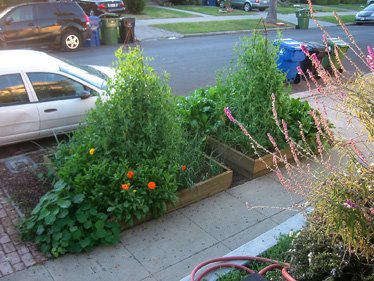
Today's Los Angeles Times Home and Garden section has a story on Guerrilla gardening, "Guerrilla gardener movement takes root in L.A. area". The article mentions our parkway vegetable garden, which consists of two 6-foot square raised beds with two wire obelisks to support beans and tomatoes. We constructed it in October of 2005 and have grown a few season's worth of crops.
Here's our parkway garden just after putting it in. We installed raised beds because of the compacted, poor quality soil.
Winter and early spring is the best season for most vegetables here in Los Angeles. In January of 2006 we had a riotous crop of sweet peas, greens, calendula and garlic.
This past winter we planted dandelion greens, collards, garlic and more sweet peas.
Last summer we had a mini corn field.
Lastly, a shot from the summer of 2006 of tomatoes supported by one of the obelisks.
With a backyard dominated by two large shade trees, the parkway, with its excellent sun exposure, is the best location for us to grow food. We invite neighbors to share our harvest, and to answer a commonly asked question, we've never had a problem with anyone getting greedy and taking all the tomatoes.
Here's our parkway garden just after putting it in. We installed raised beds because of the compacted, poor quality soil.
Winter and early spring is the best season for most vegetables here in Los Angeles. In January of 2006 we had a riotous crop of sweet peas, greens, calendula and garlic.
This past winter we planted dandelion greens, collards, garlic and more sweet peas.
Last summer we had a mini corn field.
Lastly, a shot from the summer of 2006 of tomatoes supported by one of the obelisks.With a backyard dominated by two large shade trees, the parkway, with its excellent sun exposure, is the best location for us to grow food. We invite neighbors to share our harvest, and to answer a commonly asked question, we've never had a problem with anyone getting greedy and taking all the tomatoes.
Labels:
pirate gardening,
vegetable gardening
Wednesday, December 26, 2007
Cichorium intybus a.k.a. Italian Dandelion

Our illegal parkway garden has got off to a slow start this season due to low seed germination rates. We've compensated with a trip to the Hollywood farmer's market to pick up some six-packs of seedlings. One plant we made sure to get is Cichorium intybus, known in Italian as "cicoria" or chicory, but somehow, in the case of leaf chicory, mistranslated as "Italian dandelion," probably because the leaves resemble the common dandelion weed, Taraxacum officinale (a relative which is also edible).
Both Cichorium intybus and its weedy cousin share a powerfully bitter taste that took our supermarket weaned taste buds some time to get used to the first time we tasted this plant. Changing the cooking water a few times if you boil Italian dandelion is one way to deal with the bitterness, but we prefer to just throw it together with some fat in a frying pan, such as olive oil and/or pancetta. We also add some hot pepper flakes for a nice hot counter-punch. Italian dandelion makes a good companion to balsamic vinegar marinated pork or game (squirrels perhaps--they've been stealing our lemons!).
The big taproot this perennial plant has means that it can bust through crappy soil. The bitter root can also be ground up to make a coffee substitute or flavor additive. Never having tried this we're a bit sceptical, especially since it lacks caffeine, but it's worth an attempt this coming year.
Since we purchased seedlings we have no idea what cultivar we're growing, but seeds are available from Seeds from Italy, which has an astonishing number of varieties.
Labels:
pirate gardening,
vegetable gardening
Sunday, September 30, 2007
Harvest TIme

Despite a terrible infestation of corn earworm (Helicoverpa zea) Homegrown Revolution harvested our first ear of corn from our illegal street garden. It's a variety from Seeds of Change but the package is lost in the appalling mess of our office. More on the corn when we get back from a junket to Houston Texas later this week.
Labels:
pirate gardening,
vegetable gardening
Friday, February 16, 2007
Purple Sicilian Cauliflower

The Homegrown Revolution compound's purple Sicilian cauliflower (Cavolfiore di Sicilia Violetto from Seeds from Italy) from our illegal parkway garden is now ready for the table after four months since planting from seed. Cauliflower needs some attention; it needs to be kept moist and it's prone to aphids, but the little buggers can be blasted off with a hose fairly easily. While the plant takes up a lot of room and doesn't yield a lot per square foot, what most folks don't seem to know is that the leaves of cauliflower and broccoli plants are edible as well, although best when small.
Ultimately if you've got the space cauliflower is worth the effort, especially this particular variety, since when it gets down to it, the Man's cauliflower at the supermarket just does not compare to the rich flavor of our home grown version. And if flavor isn't enough to convince you to grow your own, cauliflower is one of those plants that demonstrates the groovy world of fractal geometry, where the smallest parts of the plants maintain the geometry of the whole. Take a look at the even more fractal broccoli cauliflower mashup, chou Romanesco.
Labels:
pests,
pirate gardening,
vegetable gardening
Wednesday, November 29, 2006
Rapini!

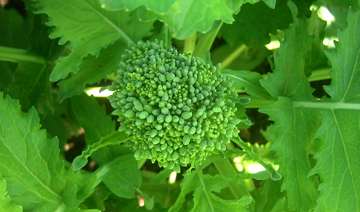
This morning SurviveLA harvested our first crop of the winter, delicious broccoli rabe, from our illegal parkway garden.
Broccoli rabe or rapini, is often described as being bitter, but I think it would be better to describe store bought broccoli as band and rapini as "flavorful". Actually rapini is not related to the broccoli plant and is instead more closely related to turnips. The variety we planted is called Cima di Rapa Quarantina and is available from growitalian.com.
Thanks Los Angeles for not enforcing your parkway codes! Sometimes LA's lack of attention to sidewalks (at the current rate, no joke, it would take 200 years to fix LA's crumbling pedestrian infrastructure) has its advantages.
Labels:
pirate gardening,
vegetable gardening
Friday, October 27, 2006
Kent's Composting Tips and Secret Weapon
Today in our continuing dialog on composting, a guest post from Los Angeles Bicycle Coalition board member, Kent Strumpell who we met up with at this week's inspiring LACBC awards gala:
I’m sure there are more correct procedures, but this is what I’ve found works.
I use a compost bin that has direct soil contact. I think this allows the introduction of soil organisms and serves to drain the pile if it gets too wet. I’ve done this same process with free standing piles as well.
I start with a small pile of dry leaves and add a load of kitchen scraps. I also add a couple shovels-full of rich soil to get things started, particularly with some worms and bugs to propagate the new pile. I’m not fastidious about what goes in, so the occasional fish and chicken scraps and leftover cat food gets into the mix, even oily stuff, but mostly it’s the usual veggies, fruits, paper napkins, etc. Though experts say no fats should go in, I’ve yet to see (or smell) a problem.
Each time I add new kitchen scraps, I add 1-2 shovels-full of dry leaves and some water if needed, turning and mixing the old and new stuff with a cultivator or shovel to aerate the pile. The proportion of dry to wet material is important. There should be enough dry leaves so the compost is kinda’ fluffy and moist, not soggy, but the dry material shouldn’t overwhelm the wet either.
Now the secret. I cut a piece of black 6 mil vinyl to approximately cover the pile and lay this directly on top of the compost (anything similar will work). I’ve found this helps keep the pile moist when I’m not able to check on it (sometimes for a week or two) and the bugs and worms seem to thrive underneath this membrane. I got the idea after noticing that I’d find rich bug habitat under boards, etc. laying around my yard. My compost piles teem with worms, sow bugs and other critters, all working hard for me. If you do a free standing compost pile, cut the plastic big enough to cover to the ground and hold it in place with rocks or bricks.
I add my scraps about once or twice a week. I don’t use the pile to consume large quantities of leaves, I just add enough of them to keep things in balance. It easily keeps up with my kitchen scrap production and gives me a rich, dark compost about like coffee grounds when it is done. I draw finished stuff off at the bottom occasionally. Or, if I want to use the whole batch, I stop adding to it for a few weeks so it can digest everything.
I’m sure there are more correct procedures, but this is what I’ve found works.
I use a compost bin that has direct soil contact. I think this allows the introduction of soil organisms and serves to drain the pile if it gets too wet. I’ve done this same process with free standing piles as well.
I start with a small pile of dry leaves and add a load of kitchen scraps. I also add a couple shovels-full of rich soil to get things started, particularly with some worms and bugs to propagate the new pile. I’m not fastidious about what goes in, so the occasional fish and chicken scraps and leftover cat food gets into the mix, even oily stuff, but mostly it’s the usual veggies, fruits, paper napkins, etc. Though experts say no fats should go in, I’ve yet to see (or smell) a problem.
Each time I add new kitchen scraps, I add 1-2 shovels-full of dry leaves and some water if needed, turning and mixing the old and new stuff with a cultivator or shovel to aerate the pile. The proportion of dry to wet material is important. There should be enough dry leaves so the compost is kinda’ fluffy and moist, not soggy, but the dry material shouldn’t overwhelm the wet either.
Now the secret. I cut a piece of black 6 mil vinyl to approximately cover the pile and lay this directly on top of the compost (anything similar will work). I’ve found this helps keep the pile moist when I’m not able to check on it (sometimes for a week or two) and the bugs and worms seem to thrive underneath this membrane. I got the idea after noticing that I’d find rich bug habitat under boards, etc. laying around my yard. My compost piles teem with worms, sow bugs and other critters, all working hard for me. If you do a free standing compost pile, cut the plastic big enough to cover to the ground and hold it in place with rocks or bricks.
I add my scraps about once or twice a week. I don’t use the pile to consume large quantities of leaves, I just add enough of them to keep things in balance. It easily keeps up with my kitchen scrap production and gives me a rich, dark compost about like coffee grounds when it is done. I draw finished stuff off at the bottom occasionally. Or, if I want to use the whole batch, I stop adding to it for a few weeks so it can digest everything.
Labels:
composting,
pirate gardening,
vegetable gardening
Tuesday, September 19, 2006
Garden Like a Pirate
In honor of International Talk Like a Pirate Day, we at Homegrown Revolution would like to introduce the concept of Pirate Gardening. Pirate Gardening involves claiming unused land that does not belong to you for growing food crops. The first bit of land we hijacked was our own parkway, that bit of dirt between the sidewalk and the street that technically belongs to the city, but is the responsibility of the homeowner to maintain. It's yet another space, like the vast asphalt hell of parking lots, garages, freeways, car lots, auto repair shops, and junkyards in our car-obsessed city dedicated to the needs of the personal automobile."Damn ye, you are a sneaking puppy, and so are all those who will submit to be governed by Laws which rich men have made for their own security, for the cowardly whelps have not the courage otherwise to defend what they get by their knavery."
- Captain Bellamy from A General History of the Robberies and Murders of the Most Notorious Pirates by Captain Charles Johnson
We decided to flaunt the city's strict rules about this space which dictates the kind of things that can be planted (basically nothing that would inhibit someone from getting out of their Hummer), and plant a vegetable garden instead. The idea was twofold: to provide vegetables for ourselves and our neighbors, and to do it in a way that would be aesthetically pleasing. Now, if we lived in some tight-ass place like Beverly Hills or Glendale some bureaucrat would, no doubt, have busted us by now, but in the City of Los Angeles, where code, building and traffic enforcement are non-existent, nobody seems to care. If we were Republicans we could probably have dug our own open pit mine or built our own miniature coal fired power plant without any City of LA official giving a damn.
For our piratical parkway garden we built two six by six foot raised beds, filled it with quality garden soil, and stuck in two matching wire obelisks for growing beans and tomatoes. Much to our surprise it has been a big success - we had a bumper crop of carrots, beans, turnips, garlic, onions, and beets in the winter and our summer crop was cherry tomatoes. Currently the beds are empty as we wait for this incredibly hot summer season to cool down (thanks for the global warming everyone!) and we are just about to plant an assorted winter crop of beans, broccoli, and assorted greens.
We've encouraged neighbors to help themselves to vegetables from the parkway garden, though few have. What has been nice has been the conversations We've had with neighbors while watering and tending the space. Several neighbors have said that it encouraged them to plant their own vegetables, albeit in their back yards. With more people growing vegetables our neighborhood becomes more self-sufficient and a wasted space has been reclaimed.
If all such marginal spaces, parkways, freeway embankments, vacant lots, and median strips were claimed by piratical gardeners and used for growing food, nobody would ever need to buy crappy supermarket produce. It's time to seize all unused urban land matey and remember the words of Captain Bellamy as you do so, "I am a free prince".
Labels:
pirate gardening,
vegetable gardening
Thursday, July 13, 2006
Get Off Your Ass and Plant a Survival Garden!
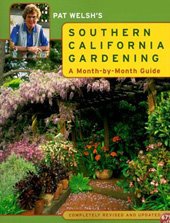
Tired of going to the market to buy crappy vegetables that taste out of season no matter what time of year it is? Tired of garlic from China and grapes from Chile? Why waste land, if you have it, on things you can't eat? And why not have some fresh produce on hand in case of the inevitable zombie invasion.Now, vegetable gardening takes some practice and unfortunately very few books deal with the specifics of Los Angeles' unique Mediterranean climate. Most gardening books and the information on the back of seed packets are written for schmucks in the northeast who have to deal with things like cold weather. This is why you need a copy of our So-Cal homegirl Pat Welsh's Southern California Gardening Guide which deals with more than just vegetables. Looking like an extra from the gardening club scene in the Manchurian Candidate, Pat Welsh has written a book with a handy to-do list for each month, useful since maintaining a vegetable garden here over a year-round growing season can get complicated especially if you want to keep a steady stream of produce on the table. In general, remember that winter here is the best time for most crops with the summer reserved for stuff that can take the heat like tomatoes and basil.
So get out there and plant your own food and remember our rule here around the Homegrown Evolution homestead: if you gotta water it you gotta be able to eat it.
Labels:
pirate gardening,
vegetable gardening
Subscribe to:
Posts (Atom)