Tuesday, July 31, 2012

Tomato Report: Indigo Rose


Another tomato I got to taste on my trip up California's central coast was the striking, nearly black "Indigo Rose". The Indigo Rose tomato was bred conventionally by Oregon State University specifically to have high levels of antioxidants. Those antioxidants are in the tomato thanks to a class of flavonoids called anthocyanin, substances which also give the fruit its dark color.

According to Oregon State,
Indigo Rose's genesis began in the 1960s, when two breeders – one from Bulgaria and the other from the United States – first crossed-cultivated tomatoes with wild species from Chile and the Galapagos Islands . . . Some wild tomato species have anthocyanins in their fruit, and until now, tomatoes grown in home gardens have had the beneficial pigment only in their leaves and stems, which are inedible.
The size is somewhat bigger than a cherry tomato. The inside of the tomato is a dark red. The taste? Good, even though the one I tried had not matured yet. I'm going to consider growing these next year.

You can find out more about the Indigo Rose on the Oregon State Extension Service website.

Indigo Rose seeds can be purchased through Johnny's Select Seeds.

Monday, July 30, 2012

Tomato Report: Blush


I think I've tasted my new favorite tomato variety: Blush. I got to tuck into a box of these delicious tomatoes at the farm of Shu and Debbie Takikawa near Los Olivos. Yellow with red streaks, Blush tomatoes have the perfect balance of sweetness and acidity.

The blush tomato was developed by geneticist and tomato geek Fred Hempel and are available via Seeds of Change.

Due to a series of gardening blunders that I'll blog about at some point, we're not going to have many tomatoes this summer from our yard. Thankfully I can visit Shu and Debbie's stand at the Altadena Farmer's Market on Wednesdays.

If you've grown Blush tomatoes please leave a comment and let us know how they did.

Sunday, July 29, 2012

Picture Sundays: Smart Car Cargo Option


Spotted in Meiners Oaks, CA. One person's creative solution to not having enough cargo space.

Saturday, July 28, 2012

Saturday Linkages: Pig's Milk, Hot Sauce, Clutter

Nettle hot sauce recipe from the Wild Food Lab.

How About a Nice Cold Glass of Camel, Buffalo, or Pig Milk?

Artisinal cocktail movement gets out of hand: Stop the Madness! | Garden Rant  

Yes, there's a parasite of the day blog:

The Clutter Culture via UCLA Magazine

And, how to deal with that clutter: Unf#$&^% Your Habitat: a smart phone ap for messy people:

Compendium of Research Reports on Use of Non-Traditional Materials for Crop Production:  

Cross-contamination: washing chicken or any meat is a bad idea | barfblog:  

Making hot sauces with wild plants:  

How to Restore an Heirloom Axe | The Art of Manliness  

Of all the linkages this week this is the most important: please consider helping one of Los Angeles' bike activists, Shay Sanchez, defeat a terrible disease: Raise Money for Shay's Kick Butt and Get Better Fund -   

For these links and more, follow Root Simple on Twitter:
 

Friday, July 27, 2012

Have You Read Any Good Gardening Books?

A scene from Peter Jackson's new movie.

Someone asked me recently if I'd read any good gardening books lately. I had to admit that I haven't. Year after year I pick up the same two books when I have a question, John Jeavons How to Grow More Vegetables,and The Sunset Western Garden Book.

Have you read an interesting gardening book recently? If so, leave a comment.

Thursday, July 26, 2012

Teflon Coated Light Bulbs Deadly to Chickens


Something I never would have thought of: Teflon coated light bulbs are toxic to chickens. In the letters section of this month's issue of Backyard Poultry Magazine is the story of a woman who lost a flock of nineteen chickens after they succumbed to fumes put off by a GE Rough Service Worklight that was in the coop. When the bulbs heat up they release fumes that are deadly to chickens and other birds. According to the McMurray Hatchery website, birds are particularly vulnerable to airborne toxins. I can't help but wonder about the effect of these fumes on humans too. Several years ago, Dupont was unsuccessfully sued over the toxicity of Teflon in cookware.

Sylvania, apparently, has a warning label on their Teflon coated bulbs, "WARNING: This product contains PTFE (polytetrafluoroethylene--"Teflon" is a brand name). When heated, it creates fumes potentially fatal to confined birds." GE does not have a warning label.

I let the ladies take the winter off of laying and it never dips below 40ºF here so we do not have a light bulb in our coop. But for those of you who do, make sure you don't use one of these shatter resistant, Teflon coated bulbs.

See also the McMurray Hatchery warning on shatter resistant bulbs.

Wednesday, July 25, 2012

Of Man Caves and Woman Caves


I spotted this magazine yesterday at the checkout line in Home Depot. According to Manland, the "ultimate man cave site," this magazine is "a special-edition magazine from the publishers of WOOD Magazine." Paging Dr. Freud--WOOD Magazine sponsoring Man Caves? Will Rigid Tools be an advertiser? The Man Caves editors get to have lots of fun coining new words like "mantastic" and throwing around headlines like "Chromed-Up Harley Hangouts."

From the preview on the Manland site, it seems Man Caves Mag delivers the usual man cave aesthetic package of neon beer signs, motorcycles and flat screen TVs. The editors of WOOD, promise that their Man Caves Magazine will "go behind the scenes to reveal what makes their personalized man space so popular—sometimes the most popular room in the entire house—and find out how they pulled it off on budget."

Man Caves Mag caught my eye, because our friends at Zapf Architectural Renderings are working on a man cave remodel of the Root Simple garage. It will look something like this:


But seriously. Man Caves Magazine got me pondering gender equality issues. Why no Woman Caves Magazine? A haphazard Google image search for "woman cave" turned up things like this:


Looks like a room that's never used.

I'm curious if Root Simple readers have man or woman caves. What activities take place in the woman cave? What room of the house does it occupy? Does your woman cave take up less square footage than the man cave? And gentlemen, if you have a homesteader's man cave what's in it? Is the man/woman cave trend just another manifestation of the decedent American clutter culture a UCLA study just documented? Comments!

Tuesday, July 24, 2012

Book Review: More Other Homes and Garbage Designs for Self-Sufficient Living


If I could have only one book on my zombie apocalypse bookshelf it would be this one. Though it has to be one of the worst book titles ever, More Other Homes and Garbage: Designs for Self-Sufficient Living, by Standford University professors, Jim Leckie, Gil Masters, Harry Whitehouse and Lily Young has everything you need to set up your off-grid compound. This book, first published in 1975 and revised in 1981, grew out of a heady period in appropriate technology research and DIY hippie experimentation that took place in the late 1960s and 1970s. In some ways it's the rural version of the original urban homesteading book, The Integral Urban House: Self Reliant Living in the City.Both books, not coincidentally, share the same publisher.

Feeding the digestor on the homestead. An illustration from More Other Homes and Garbage.

More Other Homes and Garbage covers alternative architectural materials, passive cooling and heating, home power generation, solar water heating, methane digesters, sewage reuse and disposal, water supply, small scale agriculture and aquaculture. All topics are covered in great detail with, as is expected for a group of engineer/authors, lots of formulas and tables. While some material is out of date (Art Ludwig has taken greywater well beyond what's in this book), most of the 374 pages of More Other Homes and Garbage are still very useful.

I especially like the can-do DIY tone of the introduction which describes a middle ground between "terminal pessimism" and "technophilic optimism." What's depressing, in fact, is that a lot of the topics in this book have not received much attention until very recently. The frivolous 80s and 90s were simply not the time for More Other Homes and Garbage. Thanks to the great recession, however, this book is relevant again. Get your copy before vengeful Mayan time travelers zap the interwebs in December.

Update July 31, 2012
A Root Simple reader, Lisa, pointed out that you can download this book for free here. Thanks Lisa! 

Monday, July 23, 2012

Why You Should Have a Thermometer in Your Refrigerator/Freezer


While I'm tempted to buy lots of kitchen gadgets (a male disease, I think), I know that to do so with a kitchen as small as ours is a foolish and costly pastime. One gadget that I picked up recently, however, has proven very useful: a refrigerator/freezer thermometer.

Freezers should be kept at 0ºF (-18ºC). At that temperature most frozen foods will keep for a year. The refrigerator should be below 40ºF (4.5ºC). (Source: Food Safety Advisor)

After picking up an inexpensive thermometer, I discovered that our old fridge/freezer was simply not keeping low enough temperatures. I made the mistake of replacing it with a used fridge, which also did not maintain low enough temperatures. Nor did the loaner fridge, provided to us by the shop that sold us the used fridge, keep low temps. Thankfully we were able to return those units and buy an inexpensive new fridge which works just fine. The moral here was that I should have listened to the advice of a friend of mine who owns a restaurant who told me that you should buy used stoves and new refrigeration. Stoves are easy to fix, but fridges, often times, are harder to keep running.

So why don't fridges come with a built-in thermometer? How else can you know the temperature?


Saturday, July 21, 2012

Saturday Linkages: Spoiled Kids, Leaf Blowers, and Yet More Signs of the Artisinal Apocalypse

Customized leaf blower by artist Rubén Ortiz-Torres

Those damn leaf blowers! It's Not About the Noise: Pollen, Mold, Feces and Lung-Lodging Particulates:

Why Are American Kids So Spoiled? : The New Yorker

Man builds 50 Foot Wooden Tower to reach vegetable garden: 

Another sign of the artisinal apocalypse: NYC water cafe sells fancily filtered local water

Hacked Ikea Leaning Chair:  

Authors@Google: John Jeavons:

Stop the War on Front Yard Vegetable Gardens - Arrêtez la Guerre contre les Potagers sur les Cours Avant  

Chicken proofing your vegetable garden: Garden Rant

Color in the (House and) Garden | Garden Rant

Desperately Seeking Shade: How South L.A. Bus Riders Weather the Elements  

Color Palettes Inspired by Cats from Design Seeds -

For these links and more, follow Root Simple on Twitter:
 

Friday, July 20, 2012

Front Yard Vegetable Garden Update


One advantage of living in a slightly rough-around-the-edges Los Angeles neighborhood is that nobody gets bent out of shape about front yard vegetable gardens. Indeed, they are  a tradition in immigrant neighborhoods.

The picture above is an update of one of the front yard gardens Kelly blogged about back in May.


It looked like this when she first blogged about it. Not sure exactly what's growing here. It looks like beans from a distance, but up close they're not any bean variety that I've ever seen. There are also bitter melons and hot peppers growing on the front fence.

Looking nice, and food will be on the table soon.

Thursday, July 19, 2012

Dr. Chase, 19th Century Mixologist


And I thought book titles were getting too long. Root Simple reader David Stentiford sent me a link to an online collection of recipe books, Feeding America: The Historic American Cookbook Project, maintained by Michigan State University. David especially wanted to call attention to a book, published in 1864, Dr. Chase's Recipes. The full title of Dr. Chase's book?
Dr. Chase's Recipes; Or, Information for Everybody: An Invaluable Collection of About Eight Hundred Practical Recipes, for Merchants, Grocers, Saloon-Keepers, Harness Makers, Painters, Jewelers, Blacksmiths, Tinners, Gunsmiths, Farriers, Barbers, Bakers, Dyers, Renovaters, Farmers, and Families Generally, To Which Have Been Added A Rational Treatment of Pleurisy, Inflammation of the Lungs, and other Inflammatory Diseases, and also for General Female Debility and Irregularities: All arranged in their Appropriate Departments.
There's certainly many recipes of interest to the modern homesteader, not to mention artisinal mixologists, in this book: rhubarb wine, bitters, spruce beers and "Lemonade--To Carry in the Pocket":
Loaf sugar1lb.; rub it down finely in a mortar, and add citric acid 1/2 oz: tartaric acid will do, and lemon essence 1/2 oz, and continue the trituration until all is intimately mixed, and bottle for use . . . A rounding tablespoon can be done up in a paper and carried convenently in the pocket when persons are going into out-of-the-way places, and added to half pint of cold water."
And, should all the sugar so loved in the 19th century rot out your teeth, Dr. Chase is kind enough to provide instructions on how to extract your own teeth with, "little or no pain."

Wednesday, July 18, 2012

Tree Tobacco as a Stinging Nettle Cure

Tree tobacco or Nicotiana glauca. Image from Wikipedia.

Yesterday's Solanum nigrum (Black Nightshade) post reminded me of a fascinating tidbit about another plant from the nightshade family that I learned from foraging expert Pascal Baudar: the leaves of tree tobacco (Nicotiana glauca) ease stinging nettle rash. We were out gathering nettles with Pascal, so the lesson was much appreciated--and field tested. All you have to do is rub a Solanum nigrum leaf on the sting--make sure some of the leaf juice gets on there-- and the sting goes away. So if you plan to harvest nettles, I'd recommend you keep a tree tobacco leaf in your pocket.

The classic herbal antidote to nettle stings is Jewelweed, but I don't believe it grows in the southwest--at least I've never seen it. Tree tobacco is a good substitute for folks in our region

Native Americans smoked Nicotiana glauca and used it as a topical medicine. It is poisonous if taken internally.

A late note from Kelly, who is out of town and so didn't get to consult on this post before it went up: 

As Erik says here, Nicotiana glauca totally works for nettle stings--I highly recommend it-- but I have some contradicting information regarding Native American usage.

I took a herbology class with the late Cecilia Garcia, who was a Chumash medicine woman, and she told us that Indians used this plant as an appetite suppressant during hard times. The adults would drink tea made of its leaves so they could give what food they had to the children. This sad story always gives me chills when I think of it.

That said, I would never drink it myself! There are safer appetite suppressants out there. The toxicology report Erik links to seems to indicate that the fatalities occurred in people who mistook it for an edible green and ate a lot of it.

As always...toxicity is related to dosage!

Also, I wouldn't smoke it. If you want to smoke natural tobacco, it would be safer and probably better tasting to grow an interesting old strain of heirloom smoking tobacco. Native American smoking blends tend to be mixes of many plants, so I'd be wary of a 100% glauca cigarette. Again...dosage!

Tuesday, July 17, 2012

Black Nightshade (Solanum nigrum) is Edible and Delicious

Black Nightshade (Solanum nigrum)

The issue of the edibility of black nightshade (Solanum nigrum) came up in the comments on our post on forager Pascal Baudar. We've blogged about the confusion between the edible Solanum nigrum and the toxic "deadly nightshade" or Atropa belladonna in a post last year. But Pascal left a link to an excellent article by author and forager Sam Thayer that puts in the nail in the coffin of the myth that Solanum nigrum is poisonous.

Deadly Nightshade (Atropa belladonna)

Two lessons here. As Thayer puts it, "myths of toxicity are commonplace (in fact, I’d argue that they are a universal feature of human culture) while myths of edibility are exceedingly rare, since they are soon discredited." I strongly suspect that there are many other plants wrongly accused of toxicity. Remember that tomatoes were long thought poisonous, in part due to similarities in appearance to Atropa belladonna, and associations with witchcraft.

The second lesson is the importance of using scientific not popular names when describing plants. Much of the confusion surrounding Solanum nigrum is caused by "experts" confusing it with Atropa belladonna due to the similarity between both the appearance of the plant and the popular names. Solanum nigrum is, by the way, much more commonplace. 

Unripe (green) fruit of Solanum nigrum does contain solanine and should be avoided, but the ripe fruit is perfectly edible and quite delicious. People all around the world eat Solanum nigrum. In parts of the US Solanum nigrum berries are made into pies. I've snacked on Solanum nigrum berries from the backyard and I was lucky to be served Solanum nigrum prepared in a balsamic reduction sauce by Pascal's partner Mia Wasilevich...and I've lived to tell the tale!

Monday, July 16, 2012

A Tour of Lloyd Kahn's Compound


As I've mentioned before I'm a hopeless Lloyd Kahn fanboy. I love his books and his blog. Anyone who started skateboarding at 65 and is still riding well into his 70s has my respect. In this video tour of the Kahn compound, you'll see his Bolinas, CA homestead.

Sunday, July 15, 2012

Saturday, July 14, 2012

Saturday Linkages: Keeping It Cool

Watering the roof. One of the low-tech home cooling tips on the Build It Solar Blog.

Tiny Home in Italy made out of pallets

Build-It-Solar Blog: Cooling Without Power

Build-It-Solar Blog: DIY Solar Water Heating for 7 Unit Apartment

Measure for Measure - Beth Schaleben's Yardstick Table

1931′s Remote-Controlled Farm of the Future

A sailboat made out of five gallon buckets:

Americans Are as Likely to Be Killed by Their Own Furniture as by Terrorism - The Atlantic

Bank’s idea for tackling the financial crisis: six bicycles
 
Follow the Root Simple twitter feed for more linkages.

Friday, July 13, 2012

Lego-Robot Chickens


In response to our Monday post on clicker training chickens, Root Simple pal and fellow Master Food Preserver Diane Trunk posted a video on our Facebook page. Diane explains,
Here's a link to a silly video of our trained chickens. My son trained them to come running in response to a beep. The beep signaled that a lego-robot box (you'll see) was going to open, and the hens would get their favorite treat: string cheese. Alas, these hens are no longer with us. Our new ladies don't care about string cheese, or even Lego robots.

Thursday, July 12, 2012

Pascal Baudar: Rock Star Forager

Photo by Mia Wasilevich

Los Angeles is home to a new rock star of foraging, Pascal Baudar. Originally from Belgium, I met Pascal through the Master Food Preserver program. Pascal teaches some amazing foraging classes in the Los Angeles area that you can sign up for via his meetup group: Los Angegles Wild Edibles and Self Reliance. He also has a website, Urban Outdoor Skills.

What makes Pascal different from may other foragers is that he has collaborated with his partner Mia Wasilevich, to figure out innovative culinary uses for the "weeds" we find in our local landscape. His Facebook page is full of stunning photographs such as the one above:
Quick wild edibles snack for lunch. Steamed Cattail heads with butter and habanero infused salt (homemade). Sauteed yucca flower buds and lambsquarters with aged balsamic vinegar. California Black walnut hot sauce (very similar to A1 but with a kick and more sweet). Some wild radish and mustard flowers as well as home made infused California bay salt.
A few weeks ago I had the privilege of eating a foraged green salad, soup and "deconstructed potato salad" that he and Mia cooked up. It was, no exaggeration here, one of the most amazing meals of my life. That green salad that Mia prepared and Pascal foraged looked like this:

Photo by Mia Wasilevich
It consisted of:
Yucca flowers and bud in a nighshade berries redux sauce, sow thistle, curly dock, amaranth, wild radish sprouts, wild radish pods, cattail, radish flowers, mustard flowers, purslane in a lemon (secret dressing) and on the right, pickled yucca shoot, radish and walnuts with goat cheese.
All of the items in both dishes are easily obtainable here and many other places in North America. Proof that you don't have to spend a lot of money to eat gourmet. 

Wednesday, July 11, 2012

Pure Vegan


Root Simple pal Joseph Shuldiner has pulled off something of a miracle with his new book Pure Vegan: 70 Recipes for Beautiful Meals and Clean Living. You'll find no bizarre attempts to mimic meat. Ted Nugent might even dig the recipes in this book if you didn't show him the cover.

Shuldiner has no agenda other than cooking up pure deliciousness. The recipes in this book just happen to be vegan. What you will find are some of my favorite ethnic foods: a nut mixture called Dukkah and roasted red pepper paste from Armenia called muhammarah. There's also an idiot proof bread recipe that I teach at the Institute for Domestic Technology that Shuldiner runs. And, do I need to mention the vegan cocktails?

Full disclosure: Kelly and I helped test a few of the recipes in this book. Neither of us are vegans, but I'd happily make this book a part of our library and use it when the Nuge comes over for dinner.

Tuesday, July 10, 2012

The Return of the Fraternal Society

A member of the Woodmen of the World with his ceremonial axe from phoenixmasonry.org

Archdruid John Michael Greer, by his own admission, likes to dust off forgotten ideas and give them another chance at life. One of those dusty notions Greer has mention in passing is the fraternal organization. Greer is both a Druid and a Freemason. In this time of economic uncertainty, I suspect that Greer is on to something. It may be time for the revival of the fraternal organization.

Fraternal societies provide a number of benefits:
  • A "third place," i.e. a gathering spot outside of the home and work.
  • A social safety net.
  • Moral and spiritual guidance.
  • A model for and way to practice self-governance in small groups. 
We have very few non-commercial "third places" in the US. Starbucks calls itself a third place, but you have to pay and follow the company's rules while you sip your latte. As to our social safety net, our nation's debt levels call into question the long term survival of things like Social Security and Medicare. And, fraternal groups have a long history of providing a model for how to run a meeting as well as non-sectarian moral and spiritual wisdom.

There is, of course, a downside to fraternal organizations. One need only think of the KKK to recall a long history of racism. But, I believe, fraternal organizations could be revived and reformed along more egalitarian lines. And it might be wise to act soon to get alternative support networks in place should times get worse.

A Very Brief History of Fraternal Organizations

Nineteenth century America had hundreds of different fraternities, everything from the Knights of Pythias to the Order of Owls. The grandaddy of them all is, of course, Freemasonry. Take a look at the rituals of any of these 19th century organizations and you'll see that most of them are simply offshoots of the Freemasons.

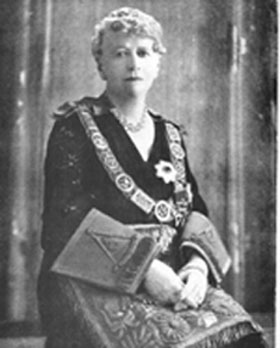
Yes, there are women Freemasons
What we now know as Freemasonry grew out of mason's guilds sometime in the 16th century, for reasons that aren't entirely clear. Women, incidentally, were made Freemasons in France beginning in the early 18th century. In the French, Spanish and Italian speaking parts of the world Freemasonry is co-ed.


Freemasonry in the US lost much of its political, social and spiritual content in the wake of a scandal that took place in the 1820s. From that point on it became what some have called "Rotary with ritual." That is, just a social club with some strange outfits and, in the case of the Shriners and after-hours "side degrees," some silly rituals like riding a fake goat or driving around in tiny cars.

The baby boomer generation simply did not join fraternal organizations and membership swiftly declined until just recently. To some extent, Alcoholics Anonymous and Narcotics Anonymous have fulfilled some of the roles fraternal organizations used to play. And women entering the workforce means that there is less time for the after work hijinks of the lodge room.


A new generation of men now reaching middle age is looking into Freemasonry once again, and some of the original values of "the craft" are being revisited (see this article from the LA Times for more on changing Masonic demographics). Freemasonry is also growing in continental Europe and is very important in Spanish speaking immigrant communities in the US (again, continental European and Spanish speaking lodges are sometimes co-ed).

Why is a Homesteading Blog Talking about Fraternal Organizations?

The urban homestead movement is, in part, about forming networks to boost the resilience of our communities. This includes self-help and mutual aid--benefits provided by fraternal societies prior to the New Deal era. It seems risky to assume that our current social safety net will be in place forever. I think we need a backup plan. Religious institutions can be part of that backup plan, but fraternal groups can provide a crucial link between people that cuts across religious, racial and economic divisions.

But if fraternal groups have any hope of success they will, this time around, need to stress racial and gender equality and not repeat the discriminatory errors of the past (and unfortunately the present). Meetup.com is a great tool to develop communities unified by interest, but it does not guarantee that you'll meet people different (by race, economic class, profession) than yourself. And Facebook is just about making Mark Zuckerberg rich.

Fraternal organizations may or may not be the best vehicle for building community, I'm not entirely sure. But I think we will see their revival soon. I'm very interested in hearing what you think of the idea. Do you belong to a fraternal group? Do you think it's an idea whose time has returned or something that should be relegated to the dust bin of history?

For more on the dozens of 19th century fraternal groups that used to be active in America see the online Masonic Museum. 

Kelly chimes in on Erik's thoughstyling: While I agree that grass-roots based social safety nets may be invaluable in the future, I'm not as sanguine about fraternal organizations as Erik. Why? Because I am female. It seems to me that these organizations would have to be reinvented from the top down to be of use to 50% of the population--and I'm only talking about gender here, not race, which is a complicated issue I'm not as qualified to speak to. And it's hard to reinvent a living organization full of people who like the organization exactly as it is. Although I'll admit I'm mostly thinking about American Freemasons when I say this, because I know some other societies have gone co-ed. I wish I could be more enthusiastic about a revival, because I like the idea of people of all sorts getting together, sharing ideas (and ideals), sharing face time and helping each other, but...well...I'm skeptical that existing fraternal societies will be the vehicle for that. Maybe with the right leadership. Or perhaps one started from scratch would be more viable. (The Homesteaders? The Canners? The League of Public Transport Aficionados?) Also, I'm also wondering if face-to-face meetings can ever compete with the isolating siren-song of the Internet. I'm curious to hear your thoughts.

Monday, July 09, 2012

Clicker Training Chickens


Our new pullets aren't as used to being handled as were our last flock of hens. And because they don't come when called, they can't leave the chicken run to wander the yard.

So I'm working on training them. I know I could do more, but for now all I'm doing is taking special treats to them once a day and feeding them while making my chicken call (cheeck-cheeck-cheeck). They're beginning to associate me and the call with treats. This doesn't mean they trust me yet, but at least they have started making greeting noises when they see me. I hunker down in the run with the treats and hold very still. I put the treats close to me and make them come near to get them. The boldest one will sometimes take a treat from my hand.

This may work eventually. Or I could step up my game. Do you know that chickens can be clicker trained? My dog trainer friend tells me that in dog training seminars, trainers are often taught clicker training (a form of positive reinforcement) with chickens instead of dogs. This is because chickens are 100% food motivated and learn fast. Also, using hens takes away the potential mind games that occur between dog and trainer. Free of that distraction, the trainer learns the correct rhythm for training. It's pure stimulus-response--reward.

Here's a video of a chick learning the basics. You can find others of this sort on Youtube:


You might be able to find a chicken training seminar in your area, probably under the banner of dog training. With the rise of urban chicken-pets I think there is opportunity to be had in offering classes for would be chicken trainers. Googling around, I found this one in Lake Oswego, Oregon which is booked months in advance.

Have you trained your chickens to do anything?

Sunday, July 08, 2012

Picture Sundays: Staying Cool on the 4th


From HaFoSaFo.com, a Chevy S10 mobile swimming pool on the 4th of July in Los Angeles. Hope you are all staying as cool as these folks.

Saturday, July 07, 2012

Saturday Linkages: Of Sewer Hunting and Fermented Lemonade


Fermented Lemonade:

Bedroom Almanac: Wall Decor Changes With Lunar Cycle

How to Sew on a Button | The Art of Manliness

Sewer hunting--the worst job ever:

Silver Lake's Vertical Garden Gets Peeled Away:  

10 Tips for Dealing with People Who Dominate Your Meetings  

Follow the Root Simple twitter feed for more linkages.

Friday, July 06, 2012

Scrambled Eggs, Tomatoes and Bulgar


I believe we've mentioned Vegetarian Dishes from the Middle East by Arto Der Haroutunian here before. Given our obsession with our local Armenian supermarket it's a must-have reference in our house. Lately we're overwhelmed by eggs. I went to this book looking for something new to do with eggs and whatever basic ingredients I had in the pantry. I tried this recipe and liked it very much. It's not pretty. It's quick and tasty comfort food. I think it will be going on regular rotation.

The description says it was served in taverns throughout Turkey and Armenia early this century. I like to imagine sitting in a shadowy cool tavern eating this with fresh flat bread and drinking a cool beer.

It's basically a simple scramble made substantial with bulgar wheat (aka burghul). See notes below for more on this ingredient.

Havgtov Tzavar (burghul with eggs)

1 onion, finely chopped
About 1 pound of tomatoes, either canned or fresh ones which have been blanched, peeled and chopped
4 ounces of fine bulgar wheat (the package may read #1/fine) (aka burghul)*
6 eggs
Spring/green onions for garnish, chopped
oil and/or butter for frying
salt, pepper, chili pepper

Two frying pans, one with a lid

***

Start by frying the onion in oil until soft. Then add the tomatoes and salt to taste. Simmer for about ten minutes, stirring occassionally, until the mixture thickens some.

Meanwhile put the bulgar in a bowl and rinse it with water until the water runs clear.  When the tomatoes and onions have had their 10 minutes in the pan, add the bulgar and stir it in well. Then put  a lid on the pan and set it aside for 10 minutes or so. (This is all the cooking the bulgar needs.)

Go to your other pan and scramble the eggs-- be sure to add salt, pepper and a little chili pepper or powder for heat, if you want.

Cook the eggs until they're just set, then dump them into the pan with the the tomato mix and toss.

Transfer to the serving dish immediately, garnishing with the green onions. Enjoy


*Regarding bulgar wheat aka burghul: This is whole wheat which has been parboiled, dried and ground. You may be most familiar with bulgar as the grain found in tabbouleh salad. Look for it in health food stores and Middle Eastern grocery stores or in the specialty aisles of some supermarkets. In the U.S. (and maybe elsewhere) it is sold in 4 different grinds, #1 being the finest and #4 the coarsest. These numbers are on the packaging. This recipe calls for the fine grind, which almost looks like Cream of Wheat, but is not quite that fine.

**Regarding substitutions:  I know there will be substitution questions, because there always are. Fine bulgar is really fine and creates a very specific texture, so I don't know of any direct substitution. Couscous is the closest, but not quite the same. So while I'd say you can't recreate this recipe exact to spirit without fine bulgar, I will also say that scrambled eggs tossed with pre-cooked grains of different sorts can be quite good--even if they are not Havgtov Tzavar. Try using cooked leftover rice, for instance, and see what happens. I also like the old Italian trick of scrambling eggs with leftover pasta (and leftover sauce if you've got it), which is something different altogether, but quite good.


Thursday, July 05, 2012

News from the Kat Kingdom at Root Simple

Meet Buck.
Warning: Shameless, meandering cat narrative ahead. If you don't like cats, all you can do at this point is turn away and sigh.

The big news here is that we've been suckered into taking another kitten--but there will be no more! We will not turn into crazy cat collectors. As it is, three cats in this tiny house is ridiculous. They're always everywhere and always staring at you, or tripping you, or sitting where you intend to sit. We'd sworn only to have two, but two factors intervened. One is our neighbor Anne. The other is the shadow of the Grim Reaper.

Factor 1: Anne is a dangerous neighbor because she almost always has a kitten (or other needful creature) on hand, and can be quite ruthless in her drive to find them homes. The story behind this particular kitten is that a neighbor girl came to Anne and led her to a tiny kitten laying cold and dehydrated in a driveway, somehow separated from its litter. Anne said he was so far gone as to be stiff, and she thought he was a goner, but given some milk and warmth he rose up like Lazarus himself. (Or as Lazarus would be, had Lazarus been blessed with four white paws a perky little tail.) I saw him that same day and fed him a bottle. Anne is very good at tricking one into getting emotionally involved with the foundlings--this is how she got us to take the other two.  And to cut a long story short, that is how she got us to take this one.

Factor 1-B: I should mention that the kitten was a dead ringer for Trout at that age. I think they share genetics, as they come from the same street. It was very hard to reject a mini-Trout.


Factor 2: Phoebe seems happy and well enough right now (I don't think you'd guess she was sick if you saw her), but medically speaking she is in decline. She has officially commenced heart failure, which means her lifespan is now measured in months. In fact, at a recent visit to the vet we found out she has not one but two distinct heart diseases, and the newly identified one is very rare in young cats. The vet is fascinated by her case. But it doesn't change her outcome much, just makes it all the more inevitable.

Obviously she doesn't have a lot of energy, but Trout does. The resulting dynamic between the two of them had become slightly worrisome. She could play with him for a bit, but then needed to rest. Trout didn't understand that and would regularly disturb her naps by pouncing on her. She is pretty good about holding boundaries, and Trout is not too much of a jerk, but nonetheless when this kitten offer came around we realized a kitten would be an excellent distraction for Trout.

So yes, we basically we adopted this kitten as a toy for Trout-- a toy that looks just like him. For some reason this reminds me of little girls with their American Girl dolls, dressed in identical outfits, playing in a solipsistic world. But anyway, it's worked out well. 

Of course we were worried about the "what ifs"  -  What if Trout and the kitten didn't get along? What if the kitten beat up on Phoebe? But we trusted what we knew about all of them to believe it would all be fine.

The transition went like this: We threw them all together, but watched them. Trout was thrilled and stalked the kitten for the first day. The kitten was less than thrilled and bristled and yowled at Trout, and Trout would back off.  On the second day, someone threw a magic switch and all of a sudden the kitten and Trout were chasing, then they were wrestling, then they were spitting on their paws and promising to be blood brothers for ever and ever.

Phoebe, on the other hand, was horrified by the new arrival. She clutched her pearls and hissed and wouldn't be in the same room as the kitten. But she would avidly watch him around corners. And after two days of sputtering indignation she got bored and came out to observe the kitten from high spots. After four days she and the kitten were playing chase games. At the end of the week all three cats were sleeping on our bed. We decided we would definitely keep him.

We named the kitten Buck. He's bold and affectionate and eats like an alligator and though he is currently Trout's toy, will likely rule the house very soon.

Blame Erik for this one.

The two boys play and snuggle together as Phoebe and Trout never have. Phoebe is dignified and standoffish, whereas Trout is a goofball. In Buck he's met his match. As a pair they generate cuteness levels that can actually make you lightheaded. They play all day, every day, and then sleep together in adorable postures. We spend far too much time watching those cats with glazed, stupid looks on our faces. Household productivity is way, way down.

Meanwhile, like us, Phoebe seems genuinely entertained by watching the boys. If Buck is Trout's toy, the two of them together are Phoebe's television set. She gets to sleep unmolested, and when it suits her, she plays with both of them. So all is well.

Phoebe kindly attends to our filing, to make up for lost household productivity

Wednesday, July 04, 2012

Five Gallon Ideas: A Blog Devoted to the Five Gallon Bucket


I've got a new favorite blog: Five Gallon Ideas which is, as you might have guessed, devoted to what to do with five gallon buckets. Incidentally, my favorite place to find five gallon buckets is behind bad bakeries--the sort that go through buckets of crappy frosting. My favorite use for five gallon buckets? Self Irrigating Pots, of course!

Let us know where you scavenge five gallon buckets and what you like to do with them.

Tuesday, July 03, 2012

Qualitites of a Good Outdoor Room

Our front porch.

One of the features of gardens that I like is that they tend to be divided into smaller spaces, what has come to be called outdoor rooms. The Ecology Center, that we visited on Saturday, is a nice example of how to arrange a large space into many smaller ones. Just like the Huntington Ranch, the Ecology Center is subdivided into distinct spaces that host school visits and classes. Well designed residential gardens, like guest blogger Nancy Klehm's, also leverage small outdoor rooms to make a small space seem bigger and to provide pleasant spots to read, meditate, use as an outdoor office, or host gatherings.

Our arbor and earth oven.

Outdoor rooms can be as simple as an area of mulch or gravel surrounded by shrubs. Or they can be much more elaborate affairs incorporating arbors, tables and decks. Their greatest benefit may simply be in getting us outside to commune with nature for at least a few minutes a day.

My ugly outdoor home office near the chicken coop.

We're in the middle of a year of re-designing our garden and there's still a lot of work to do. As a part of this process I've been trying to figure out why I prefer sitting on the front porch to sitting in the backyard. I came to the conclusion that the front porch works better as an outdoor room than the spaces we have in the backyard. I think it's because the porch better embodies qualities that make for a successful outdoor room. Those qualities are:
  • A sense of enclosure or shelter
  • A view
  • Some shelter from the elements (in our climate that's the sun)
  • A ground treatment that sets it apart from the rest of the yard (could just be mulch or could be concrete or wood)
  • A place to sit
  • Art, objects, i.e. some human touch
With these ideas in mind, how can I improve the outdoor spaces in the photos in this post? On the front porch I could add a small table to hold a book and a glass of beer. The space with the stove needs shelter from the sun during the morning (in another year the grapes will cover the arbor but until that time maybe I need to string up some shading). The earth oven we built definitely improved the "roomedness" of this space, creating a sense of enclosure and providing a focus. But I clearly need to construct something to hold the wood for that oven so as not to create a cluttered view. The last photo, of the area by the chicken coop, is obviously a disaster. Cleaning up will help, but the space also needs more of a sense of enclosure and a larger footprint to accommodate the table. A vine to cover the trellis would also help.

So what do you think makes for a successful outdoor room? Is there something I left off the list? What is your favorite space to sit in the garden and why do you like that particular spot?

Monday, July 02, 2012

The Ecology Center of San Juan Capistrano


Kelly and I had the privilege of doing a short talk this weekend at the Ecology Center in San Juan Capistrano. If you're interested in Southern California food forestry, greywater, chickens, you name it, this is the place to visit. They have an amazing garden, classes and a well curated gift store. When people ask us how to design garden and house systems in SoCal, we're going to send them to the Ecology Center.

Sunday, July 01, 2012

Picture Sundays: Compulsory Chickens


I found this old ad posted in Facebook.
Even the smallest back yard has room for a flock large enough to supply the house with eggs. The cost of maintaining such a flock is small. Table and kitchen waste provide much of the feed for the hens. They require little attention--only a few minutes a day.

An Interested child, old enough to take a little responsibility, can care for a few fowls as well as a grown person.

Every back yard in the United Sates should contribute its share to a bumper crop of poultry and eggs in 1918.

In time of Peace a Profitable Recreation
In time of War a Patriotic Duty