Saturday, June 30, 2012

Saturday Linkages: Rude and Stinky

The very stinky Dracunculus vulgaris on the Garden Professors' Blog

Stacking metal lunchbox made from tuna cans:

Grow Something Rude and Smelly-Dracunculus vulgaris:

Moss Tiles - a rally bad idea:

Life Magazine 1948: Chicago Family’s Mutant Bikes via

Geodesic Hub Connectors -  

Hiplok Wearable Bike Lock Review via  

Hot air hand dryers not as good as paper towels:  

Follow the Root Simple twitter feed for more linkages.  

Friday, June 29, 2012

Thursday, June 28, 2012

A Mason Jar Camping Lantern


Okay, so this isn't going to win any awards for ingenuity (or craftsmanship!) but its easy and it works. I use this little jar and ones like it when we car camp. Barring high winds or rain, the tea light never goes out. The handle allows you to carry it around or hang it. Headlamps are all very convenient, but little candles make a campsite feel like home. And yep, it works well in the backyard too.

 There's nothing to it, but just in case the picture makes it look more complicated than it is, all I do is wrap a piece of scrap wire around the mouth of the jar, twisting it closed. The ridges at the top of the jar hold it in place. Then I make a handle by twisting a second piece of wire around the first.

Wednesday, June 27, 2012

Composting at the NATO Protests in Chicago


Have you ever gone to a concert or a convention or some other large event and marveled at the staggering amounts of waste generated? I've been particularly wishing more of that waste was composted. And what do you know? Just as I was thinking about this, guest Root Simple blogger Nancy Klehm happened to send me a post on this very subject. If only every event had a compost tsar! Here's Nancy:

I am obsessed with urban soil health, so when I got a phone call in mid May from Steven of the Seeds of Peace Collective, I realized a soil ship had floated in. Seeds of Peace is a collective of accomplished cooks and trained street medics, based in Missoula, who provide delicious home cooked food in support of non-violent social movements. They were in Chicago to set up a free community kitchen to serve thousands of NATO conference protestors. Steven said they needed my assistance with their food waste as they had already overwhelmed a small urban garden’s compost bin.

It was late, so I waited until morning and drove my pickup to their site – a parking lot between a community center and an auto parts store. The scene was impressive: a maroon biodiesel school bus with windows dressed in curtains screen printed with frying pans and butcher knives and the largest wok and cast iron pan I have ever seen. A purple tent stretched from the bus into the lot overhanging a to-code outdoor kitchen with multiple burner stoves, wash sinks, prepping area and boxes of produce, mostly organic. At least 12 people stood prepping food for the day. Gallons and gallons of salad and stir fry ingredients were being tossed and mixed in 30 gallon coolers with small wooden oars.


Every day for a week, I picked up the 100 or so gallons of food waste a day and provided them with extra large garbage cans to pour their waste into. Their kitchen was three miles from the rallying area. Once the food was prepared, they would pack a flat bed with it and a few tables and trundle off to the park to serve their healthy, delicious food free of charge.


One pick up was an entire garbage can of delicious looking chickpea and sweet potato curry that had fermented in the sun due to the police blocking their passage to the Park. It made me cry to compost that delicious looking curry. I had to use a couple of bales of straw and dumpstered cardboard from my carbon stockpile to take care of so much nitrogenous waste. Over the past month, the pile, well integrated and covered with a thick layer of straw reached thermophilic temperatures and now is in its mesophilic stage. Most of the food is just residual moisture now and the pile has dropped in volume by at least 20% due to composting and evaporation. So much future soil!

Thanks Steven, Sarah, Patrick and the rest of you of the Seeds of Peace Collective. May you meet with strong hearts and hands on the road.

Tuesday, June 26, 2012

The Good Stuff at Dwell on Design

Joey Roth Planter.

Yesterday I ranted about techno-utopianism. Today we'll get back down to earth and take a look at three elegant and simple design interventions I found at this past weekend's Dwell on Design convention.

Joey Roth Planter

How Roth's planter works.

Joey Roth has a very clever take on a very old idea: a pot with a built in olla he calls simply Planter which is avaliable on his website for $45. Ollas are ceramic jars buried in the ground to deliver a slow drip of water to plants. Roth's design is elegant, simple and effective--take an olla and make it integral with a pot. Particularly on a hot day, conventional ceramic pots dry out quickly and Roth's planter would be great on a hot balcony or porch. His teapot is also an object of great beauty.

Scout Regalia

SR Raised Garden Kit

Scout Regalia's design team, architects Benjamin Luddy and Makoto Mizutani, had two nice items at the convention. Their "SR Raised Garden Kit" is a set of metal brackets that turn lumber you provide into an atractive raised bed. At $95 it's a bit over my price range, but it does look a lot better than Simpson ties.


The Scout Regalia bicycle is smart looking and practical. They describe it as a combo of an "English/Dutch town bike, a cycle truck, and a mountain bike." Looks like the perfect whip for LA's potholed streets.

U-Socket


The U-Socket is a standard outlet with usb charging ports. What more is there to say other than they'll probably become ubiquitous in the next few years. Clever idea.

Design Like You Give a Damn [2]


Unlike the reams of purely theoretical CAD renderings that a lot of architects churn out, some designers are actually getting off their duff and building things. Design Like You Give a Damn [2]: Building Change from the Ground Up catalogs efforts by a non-profit, Architecture for Humanity, to "bring design, construction and development services where they are most critically needed." There's some really nice projects documented in this book which also functions as a how-to for anyone interested in humanitarian design.

Monday, June 25, 2012

Mitchell Joachim's Techno-Utopian Future

Blimp Bus. Mitchell Joachim.

This past Friday I attended the Dwell on Design convention sponsored by Dwell Magazine. Amidst the high end bath fixtures and sleek induction cooktops I found a few simple but wonderful ideas that I'll blog about tomorrow. But first I've got to try to digest the strangeness that was a presentation by architect and futurist Mitchell Joachim.

Fab Tree Hab. Mitchell Joachim.

Joachim is the thoughtstylist in chief of Planetary One and Terreform One, non-profit organizations that, "pioneer visionary socio-ecological and infrastructural strategies for urban environments." Articulate and entertaining, Joachim delivered a rapid fire PowerPoint lecture showcasing many of his outré notions: floating jellyfish-like mass transit thingies, foam electric cars, strawberry shaped hydrogen peroxide powered jet pack capsules, houses made of in-vitro cultured meat and the favorite of contemporary futurists, high rise hydroponic farms.

Sheep Cars. Mitchell Joachim

I really couldn't tell if Joachim was simply trying to provoke a discussion, delusional, self-promoting, or engaged in some kind of conceptual art project in which we, the gullible audience, were part of an elaborate ironic or post-ironic house of mirrors. Joachim seems hipper than old school World's Fair futurist types and yet he's promoting exactly the same Jetson style future, albeit with an eco tinge, those of us over forty can remember from our childhood.

Green Brain, A Smart Park for a New City. Mitchell Joachim

I completely agree with Joachim that whatever designs we come up with have to make the world a better place, that technology must create what he calls a "positive contribution model." And I appreciate his clever renderings and sense of humor as a way to provoke a dialog. But Joachim's vision veers too close to what John Michael Greer calls the "apocalypse meme," the idea that some sort of cataclysmic event (Joachim suggests an ecological crisis) will usher in a new techno-utopian age. Joachim even suggested that his positive eco-feedback loops could form the basis of a new faith to replace our current consumerist spirituality.

In-Vitro Meat House. Mitchell Joachim

At the risk of being a nattering nabob of negativity, I just have to say that I think it's time to grow up and stop fantasizing about jet packs, hydroponic farms and electric cars.  We need to get realistic about our future and explore design work that lives within the resource limits of this planet. Like Greer, I believe it's time to return to what came to be called, in the 1960s and 70s, appropriate technology, things like solar water heaters, rocket stoves and permaculture. Designers have an important role to play in the coming years, but that role may be more about working on the ideal pit toilet rather than foam electric cars or in-vitro meat houses (I will admit the meat house is pretty funny). As a design challenge, that ideal pit toilet, by the way, is just as engaging, perhaps more so than the techno-utopianisms that Joachim peddles. Maybe Joachim can work on an in-vitro meat pit toilet.

Sunday, June 24, 2012

Picture Sundays: Hyperbolic Crochet


Spotted at the Institute for Figuring in Los Angeles, a piece from their Hyperbolic Crochet Coral Reef. About the process:
The inspiration for making crochet reef forms begins with the technique of "hyperbolic crochet" discovered in 1997 by Cornell University mathematician Dr. Daina Taimina. The Wertheim sisters adopted Dr Taimina's techniques and elaborated upon them to develop a whole taxonomy of reef-life forms. Loopy "kelps", fringed "anemones", crenelated "sea slugs", and curlicued "corals" have all been modeled with these methods. The basic process for making these forms is a simple pattern or algorithm, which on its own produces a mathematically pure shape, but by varying or mutating this algorithm, endless variations and permutations of shape and form can be produced.
And, yes, they have a how-to book if you'd like to try this on your own.

Saturday, June 23, 2012

Saturday Linkages: Of Sausages, Sandbags and Cell Phones

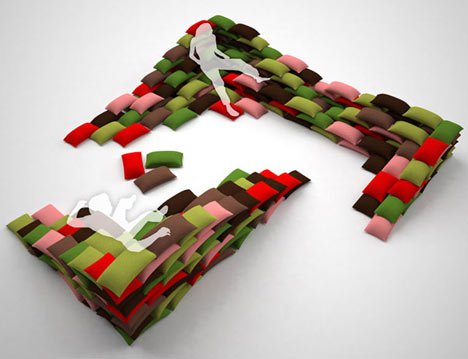
Sandbag couch via Dornob

How to Turn an Old WWII Field Phone Into a Bluetooth Handset | The Art of Manliness

Man robs man using stolen sausage | barfblog:  

Another reason not to use cardboard as mulch:

50 seconds in Cloudbreak Barrel with Kalani Chapman

Emergency sandbags repurposed as a couch

Vinegar vs. Round-up tested:

How to Use a [BUSTED] Cell Phone to Meet 5 Basic Survival Needs | The Art of Manliness  

Happiness is a glass half empty | Oliver Burkeman

Follow the Root Simple twitter feed for more linkages.

Friday, June 22, 2012

Healing the yard with a huge compost pile

The new compost pile is covered with a tarp to keep moisture in. Eventually it will fill this whole space. In the background you can see our leftover adobe bricks.


So--our regular readers will know that we have high levels of lead in our back yard soil. We're dealing with this by filling most of our yard with mulch and perennial natives to lock down the soil (lead laden dust is bad) and to diversify the local ecosystem.

Meanwhile, our vegetables must be grown in raised beds from now out. We used to have two main vegetable beds in the center of our back yard--they were our workhorses. Since the lead scare we've pulled up those beds. They were semi-sunken beds, the soil in them a mix of native soil, compost and imported soil.

When you have contaminated soil yet want to grow food, the easiest solution is to build extra deep raised beds and fill them with imported soil (soil which has, hopefully, been tested for lead!). Some people put plastic sheeting or rock barriers between the imported soil or native soil, which in effect makes the beds into giant containers.

We did something a little different--and a lot harder. We dug out a huge pit where our beds used to be. When I say "we," I mean Erik dug a huge pit. (Somehow I weaseled out of this project.) This excavation had two purposes: 1) to remove the topsoil, where most of the lead (lead being an airborne pollutant) is located and 2) to harvest the clay beneath to use in our earth oven. Between the clay harvested for making the adobe bricks and cob, and the supplemental clay that we've put aside for future repairs and maintenance on the oven, the pit has grown to be about 12 feet wide and 2 feet deep.

This pit is going to be our new planting area, but obviously it needs to be filled in. Instead of buying imported soil, we're going to grow soil by composting on a grand scale. We're going to compost right in the pit and fill it up bit by bit. When it's done, we'll have a big round area where it will probably be safe enough to plant food crops. Might the plants suck some lead up from the deep clay layer? Maybe. We could test the deep clay. Might some lead leach in from the sides of the pit? Possibly. But this solution is good enough for us.

What drives us to this decision is our intuitive relationship with our yard. I know that sounds a little woo-woo, but I encourage you all to pay attention to what your gut tells you about your gardens. It won't steer you wrong.

Our gut instincts told us to dig down rather than build up, and to make good use of excavated dirt in the oven. Now our instincts tell us to fill this giant hole with rich homemade compost rather than imported soil. It just seems more...holistic to grow out own soil. It will rise out of our meals, our labor, our intentions. It will belong to this place.

How long will this take? Probably about a year. Maybe more. We're willing to wait for those future harvests because this feels right.


Thursday, June 21, 2012

Woman Sues City of Tulsa For Cutting Down Her Edible Garden

Apparently many city officials around this great country of ours have not got the memo that a garden can be a lot more than just a lawn and petunias. I certainly hope that the gardener in question, Denise Morrison, will prevail.

Wednesday, June 20, 2012

Eating In: The Biosphere Cookbook


This has to be one of the strangest cookbooks ever published, Eating in: From the Field to the Kitchen in Biosphere 2. Author Sally Silverstone was the food systems manager during the much hyped and ultimately disastrous Biosphere "mission" that began in 1991. Without falling down the rabbit hole of discussing what went wrong and why the Biosphere project became fodder for a Pauly Shore movie, I'd just point out the hubris of thinking that you can simulate mother nature in her infinite complexity.  Watch episode 2 of Adam Curtis' All Watched Over By Machines of Loving Grace for more on that problem.

Philosophical quibbles aside, what's interesting about this cookbook is that ambitious suburban homesteaders might be able to, like the Biospherians, source entire meals from the backyard and make use of the bare-bones recipes in this book. And don't worry about having to grow your own cooking oils--the Biospherians had trouble with that and have thoughtfully skipped any deep fried items.

The Biosphere's kitchen.

But let's get to those recipes! For relaxing next the the shore of the Biosphere's simulated ocean there's "Beach Blanket Bean Burgers," "Bean Balls in Cheese and Tomato Sauce" and "Banana Bean Stew." For meat eaters there's pork, chicken and tilapia but, as this is the Biosphere, you'll have to do the slaughtering yourself. And for desert there's "Biospherian Rice Pudding," "Biospherian Baked Doughnuts" (made with potatoes) and "Banana Wine."

Like Archdruid John Michael Greer, I find it hard to believe that the fantasy of orbiting space colonies that inspired the Biosphere seemed doable when I was a kid. It's obviously time to revise those plans. I have a strong suspicion that in the future we'll be "eating in" just like the Biospherians, except that our "in" will be good old terra firma.

Tuesday, June 19, 2012

Don't store your cucumbers in the fridge

Image courtesy of UC Davis. Photographer: Don Edwards

Just in time for cucumber season, some news that surprises me. Did you know that you should store cucumbers at room temperature?

Credit for my enlightenment goes to UC Davis. (May I just say bless UC Davis for all the good it does?) In this case I'm referencing their department of Post Harvest Technology. According to them, cukes should be stored at room temperature. If you do feel the need to put them in the fridge, they can tolerate up to 3 days of cold storage if they are used soon as they are removed from the refrigerator.

Seems that cucumbers are susceptible to cold injury if held more than 3 days at temperatures lower than 50F/10C. Signs of cold injury are wateriness, pitting on the outside and accelerated decay

Another factoid: Cucumbers are sensitive to ethylene gas, which is put off by some ripening fruits and vegetables. So for longest storage, don't keep your cukes near melons, tomatoes or bananas.

Tomatoes, peppers and eggplants are also damaged by cold, so keep these on your counter as well.  I've highlighted cucumbers in this post, because I think most people refrigerate them as a matter of course--I did, at least. Whereas its more common, I think, to leave tomatoes to ripen on the counter. If you want to read up on any particular fruit or veggie, see the fact sheets linked below.

UC Davis Fact Sheet on Cucumbers

Index of all their many fact sheets

"Storing Fresh Fruits and Vegetables for Better Taste" -- a handy .pdf chart to print out and hang on your fridge.

Monday, June 18, 2012

Erik and Kelly to Speak at Stories Cafe This Saturday


Join us this Saturday June 23rd at 7:30 PM at Stories Books and Cafe in our own neighborhood of Echo Park for a lecture and book signing of our first book The Urban Homestead. We'll share what's going on around the Root Simple compound along with some tips and tricks. Looking forward to seeing some blog readers! Stories is located at 1716 West Sunset Blvd. in the beating heart of Echo Park, Los Angeles.

Four Ways to Preserve Prickly Pear Pads (Nopales)


For my final project in the Los Angeles Master Food Preserver Program I attempted to see how many ways I could preserve the abundant pads of the prickly pear cactus that grows in our front yard. Of course they are best fresh, but I like them so much that I wanted to see if I could preserve some for use later in the year. Incidentally, I prepare them fresh by first cutting them into strips and boiling them for five minutes to remove the mucilaginous texture. After boiling I pan fry them and serve them with eggs. It's a meal that comes, except for the salt, entirely out of the yard. What follows are the methods I used to preserve those tasty pads.


Dehydrated
I removed the spines, cut the pads into 3/4 inch strips and boiled them for one minute. I then marinated them for ten minutes in soy sauce and dried them until brittle in an Excalibur dehydrator at 135º F for a couple of hours. Prepared this way they actually taste a bit like beef jerky. You definitely need to spice them--when dried plain they have a bit of a dirt note in terms of taste. Next year I plan on trying some more dried "nopalitos" with some different marinades.

Frozen
Once again, I removed the spines. cut them into strips and boiled them for one minute. I then packed them in to freezer bags. Freezing is the best method in terms of taste and nutrition. It's easy and it works great.

Pickled
I used the this okra recipe from the National Center for Home Preservation for my pickled nopalitos. They turned out very tasty.

Pressure Canned
Prickly pear is sold canned both in water and with a small amount of vinegar.  Unfortunately there are no tested home canning recipes for pressure canned prickly pear pads (this needs to be rectified but is difficult in an era of reduced funding for Extension Services). I used a tested recipe for okra and consumed the product immediately as I don't trust my own untested pressure canning recipes. The results were acceptable but not exciting--basically they tasted like canned vegetables and had a slightly mushy texture. If I had a tested recipe to work with, that used a small amount of vinegar, perhaps the processing time could be reduced, leading to a crisper result.

Lastly I should mention that I've dried and made jelly with the fruit in previous years. If you've got a favorite way to preserve the pads or fruit please leave a comment.

Sunday, June 17, 2012

Picture Sundays: The Huddle Couch


"It's a bed. It's a couch. It's a multi-functional piece of furniture for laid back lifestyles. The HuddleCouch® offers new possiblilites for entertainment and comfort."

Believe it or not this ad is dated 1994. And apparently you have to wear a suit to enjoy your HuddleCouch. But the formal attire doesn't stop this couch from being, "the most fun you can have on a couch or a bed. It's a way of life!" Indeed.

Saturday, June 16, 2012

Saturday Linkages: Talking Plants, Microbes, Groundcovers, Shaving Rituals


Maybe Prince Charles was right after all: British scientists reveal plants really do talk

Finally, A Map Of All The Microbes On Your Body
 
Groundcovers for gaps:

Unique Shaving & Grooming Rituals from History and Around the World | The Art of Manliness

Handlebar Bicycle Hanger Suspends Your Ride from the Wall | Designs & Ideas on Dornob

Hacking a vintage phone into an old VW minibus to use as a kids/driver intercom:  

Follow the Root Simple twitter feed for more linkages. 

Friday, June 15, 2012

The Very First Urban Homesteading Book


The urban homesteading shelf at your local bookstore, thanks to the great recession, sure has gotten crowded in recent years. There are many fine volumes now alongside our two books with a great diversity of authors opining on chicken coops, homemade soap and composting. This is a good thing--we need as many voices as possible.

But there's nothing new here. On a serendipitous trip to the library last week I stumbled across what must be the very first urban homesteading book, Cato and Varro's De Agri Cultura (On Agriculture) written around 160 BC. Well, it's really more of a rural homesteading manual, but much of the advice seems familiar.

Looks like Cato the Elder forgot to use sunscreen.
Cato holds the farmer in high esteem,
And when they would praise a worthy man their praise took this form: "good husbandman, good farmer"; one so praised was thought to have received the greatest commendation.
The tips on how to site your rural homestead is exactly as I would suggest:
It should have a good climate, not subject to storms; the soil should be good, and naturally strong. If possible, it should lie at the foot of a mountain and face south; the situation should be healthful, there should be a good supply of laborers, it should be well watered, and near it there should be a flourishing town, or the sea, or a navigable stream, or a good and much traveled road.
Varro's directions for building a chicken coop and run are pretty much what I followed, complete with netting to keep the hawks out. But I never thought of building a caretaker's residence into the coop:
In addition there should be a large room for the caretaker to live in, so built that the surrounding walls may be entirely filled with hens' nests, either built in the wall or firmly attached; for movement is harmful to a sitting hen.
Maybe this will be a new trend in big cities where chickens are hip. Half off the rent in return for living with the chickens!

Should you need to know the exact prayer to Janus, the right point to read the entrails and the precise number of employees you'll need to run a vineyard, you'll get that here too. But the best advice is probably this simple and timeless statement: "Be a good neighbor."

Thursday, June 14, 2012

Sun Boxes: A Solar Powered Public Art Project


It's not often that my unused music degree intersects with the topic of this blog, but I got an email from Craig Colorusso describing a neat, solar powered public art project that he's touring the US with called Sun Boxes. From the description on his website:
Sun Boxes are an environment to enter and exit at will. It’s comprised of twenty speakers operating independently, each powered by the sun via solar panels. There is a different loop set to play a guitar note in each box continuously. These guitar notes collectively make a Bb chord. Because the loops are different in length, once the piece begins they continually overlap and the piece slowly evolves over time.
You can find out more about the project at www.sun-boxes.com. Make sure to listen to the recording of the boxes--I could listen for hours--the sound is at once hypnotic and deeply relaxing.

Wednesday, June 13, 2012

Remember to Label Those Jars!


"Label, label, label!" This was one of the most important lessons I learned in my Master Food Preserver training. You'll note, from the jars above, that I'm not very good about this. When were those jars canned and what's in them? I have no idea. They were probably the result of some late night canning frenzy two years ago. At the time I probably thought to myself, "I'll label them in the morning."

Not only should the jars be labeled, but it would also have been nice to have some notes on the recipe I used and where the fruit was sourced from. To this end I've started a preservation diary in a useful program called Evernote.

Perhaps I should get a tattoo on my forearm that says, "Label, label, label."

Tuesday, June 12, 2012

The Sacred Chickens of Ancient Rome


I stumbled on an odd historical anecdote last week: the use, by the ancient Romans, of sacred chickens as a form of divination. From the Encyclopedia of Diderot & d'Alembert:
Sacred chickens were chickens raised by priests in Roman times, and which were used for making auguries. Nothing significant was undertaken in the Senate or in the armies, without omens being drawn from the sacred chickens. The most common method of drawing these omens consisted in examining the manner in which the chickens dealt with grain that was presented to them. If they ate it avidly while stamping their feet and scattering it here and there, the augury was favorable; if they refused to eat and drink, the omen was bad and the undertaking for which it was consulted was abandoned. When there was a need to render this sort of divination favorable, the chickens were left in a cage for a certain amount of time without eating; after that the priests opened the cage and threw their feed to them.
I had hoped to be the first blogger to break the sacred chicken story, but a blogger named Elektra Tig beat me to it, telling the tale of a naval battle involving some sea-bound sacred chickens who delivered an unwanted prophesy. The naval commander, Publius Claudius Pulcher, refused to take no for an answer and had the sacred chickens tossed overboard saying, "Let them drink, since they won't eat."

Elektra Tig also found a drawing of a sacred chicken coop just in case some of you are looking for coopatecture inspiration:


Maybe some of us urban homesteader types can put together a flock of sacred chickens for the US senate. By Jove, it would probably work better than whatever means of projection they are currently using.

Update: Michael Pigneguy left a link on Facebook to a Smithsonian article with the following chicken divination anecdote:
A chicken bred for the demands of American supermarket shoppers presumably has lost whatever magical powers the breed once possessed. Western aid workers discovered this in Mali during a failed attempt to replace the scrawny native birds with imported Rhode Island Reds. According to tradition, the villagers divine the future by cutting the throat of a hen and then waiting to see in which direction the dying bird falls—left or right indicates a favorable response to the diviner’s question; straight forward means “no.” But the Rhode Island Red, weighted down by its disproportionately large breast, always fell straight forward, signifying nothing meaningful except the imminence of dinner.

Monday, June 11, 2012

Google Sketchup as an Urban Homesteading Tool


I just completed a new chicken run, greatly assisted by an amazing and free 3d design program: Trimble SketchUp (formerly Google SketchUp). While it takes some time to learn (I'm still learning!), this program helped me visualize the chicken run as well as estimate the amount of materials I'd need to buy. Here's how I used it to create the run:

Previous runs either did not work (chickens squeezed out and flew over) or were hideously ugly. I resolved to design a run that was both aesthetically pleasing and practical. Inspired by A-Frame cabins of the 60s Kelly and I came up with this idea:


I took my A-Frame plans to a friend, John Zapf, who runs Zapf Architectural Renderings. He took some time out, literally, from rendering multi-million dollar buildings to help with my lowly chicken run project. He could see a few problems with the A-Frame idea immediately--wasted space on the side towards the fence, and a lack of continuity between the shape of the chicken coop's roof and the new run. Taking out pen and paper (sometimes the quicker option!) he sketched out  a much better design:


I took John's sketch and entered it into Sketchup:


Being the low-tech bumpkin that I am, once I completed the run I was excited to see how much the real thing looked like the rendering.

SketchUp has some powerful features. There's a library of objects other people have already drawn for you that you can download for free. For instance, the fence and tree (the exact same species of tree in my backyard, by the way) were both in the SketchUp library. And, amazingly, you can drop your model into Google Maps and even figure out the shadow patterns it will cast in the course of a year.

I'd strongly recommend going through the tutorial videos before trying to use SketchUp (I didn't do this and wasted a lot of time initially).

And thanks to John Zapf and Anne Hars for your help!

Sunday, June 10, 2012

Picture Sundays: Toyon in Bloom


Our young Toyon (Heteromeles arbutifolia) had its first bloom this year. What's so great about Toyon?
Get one for your food forest! 

Saturday, June 09, 2012

Saturday Linkages: Collapse Now and Avoid the Rush

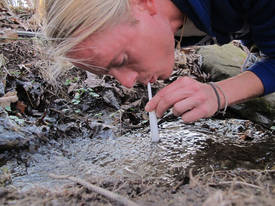
Using a tampon as a "survival straw" water filter.

Outdoor Deck & Inside Room Linked via Climbing Walls & Ladders | Designs & Ideas on Dornob

Did you know lemons are hybrids? The secret lives of citrus fruit - Boing Boing

The Archdruid Report: Collapse Now and Avoid the Rush

Our friend Nancy Klehm: Urban Foraging: Looking for Herbs on the Wild Side

Why you should keep a tampon or two in your survival kit:

A repurposed trampaline becomes teepee bed:  

Hot new method of weed control not so hot:

A Ton of Ideas For Using Old Pallets

Sharing Economy vending machine:

Homestead Survival: Healthy Fruit Orange Blossom Water Frozen Popsicle...

The errors of "pop and drop" planting of shrubs:

Follow the Root Simple twitter feed for more linkages.

Friday, June 08, 2012

Secrets In Your Pantry?


Craig Ruggless of Winnetka Farms asked me a great question this past weekend, "If people could see your kitchen pantry what would you be most embarrassed about?"

The first thing that came to mind is the occasional package of scary, deep fried, orange dusted cornmeal snacks. The truth is that we don't often have them on hand more than a couple times a year (largely because I would go through them like a crack addict). But we do have plenty of other dodgy convenience foods picked up at Trader Joes and consumed on those evenings we're too tired to cook.

While the image of the urban homesteader is one who dines on nothing but wholesome veggies, backyard eggs and artisinal canning projects, the truth is that we're all human and live in a world where Cheez Doodles* practically grow on trees. In fact I'm tempted to back-engineer the Cheez Doodle in the same way as the artist who built a toaster from scratch a few years ago. And I'm sure that a hipster Brooklynite will soon open an artisinal Cheez Doodle shop.

So what are you embarrassed to admit is in the pantry? Or maybe you've found a way to banish all the wonders of our industrial food system. Comments!


*Interesting fact: I don't think you can even buy the Cheese Doodle brand here in CA (we've never seen a real Doodle!) but we use the name.

Thursday, June 07, 2012

Our New Chickens


When I put out the call to you, our readers, to name the ideal urban chicken I got a call from my friend Craig Ruggless of Winnetka Farms. He said something like, "Duh, the Barnevelder, of course!" Craig and his partner Gary Jackemuk have an ambitions breeding program to take the Barnevelder from show chicken back to farm chicken. So far the results are impressive.

I took this as a message that I should fix my run and get ready for some new chickens. This weekend, I picked up four new pullets from Winnetka Farms, all crosses between a Barnevelder and an Americauna. I call them "Winnetkavelders."

The Barnevelder, according to Craig and Gary, are a great dual purpose breed that is both heat and cold tolerant. They also take well to confinement.

The "Winnetkavelders" that now live at the root simple compound have an unusual characteristic. At least one of the pullets is laying an olive green egg:

Hmm. This color may not display correctly. Basically, the green-ish egg they lay is exactly the color of a cocktail olive. Not one of those fancy (and suspiciously) bright green olives, but the true drab olive you'll find in your typical dive bar martini olive. (No offense to the hens! We're just talking color here.) Yesterday we were joking with a friend that we should paint red pimento spots on the end.

This is the result of crossing the blue/green egg color of the Americauna with the dark brown of the Barnevelder. Another of the Winnetkavelders is laying an amazing dark brown egg like a purebred Barnevelder and a third is laying a green/olive egg with brown spots. They've been very productive and are taking well to their new surroundings.

A big thanks to Craig and Gary!

Wednesday, June 06, 2012

Book Review: 1491


I'm way late to this party, because 1491: New Revelations of the Americas Before Columbus came out in 2006 and was a best seller, so it's probably not news to many of you that this is a fantastic book.

For those of you who haven't read it, though, this is the type of book that you look up from every few minutes and say, "Listen to this!" or "Did you know...?" 

1491 is a depiction of the Americas just before and just after contact with the Europeans. The gist of it is that the peoples of the Americas were much more populous and their civilizations more advanced than we are taught in our school books.

The first part of the book deals with horrific impact of imported European diseases on the native populations. I always knew it was very bad--but I never understood the extent of the devastation. In part this is because I never understood extent of the civilizations destroyed. This section is depressing, but it's well worth understanding.

The rest of the book covers so much ground that I don't even know what to focus on. Warring archeologists struggling to define the past. The complex and fascinating debate over when and how the first people came to the Americas. (Nope, the old land-bridge theory doesn't hold water anymore.) Grisly tales of the Conquistadors coupled with intriguing records made by Spanish scribes that offer us precious insights into the strange and magnificent technologies and theologies of the Inka, Maya and Aztecs. The mystery of the development of corn and it's impact on the world. The true history of the buffalo and the passenger pigeon--it's not what you were taught. The wonders just pile up. 

What I think back on most, though, is what is revealed through these stories about the relationship between nature and culture in pre-contact Americas. As with Tending the Wild: Native American Knowledge and the Management of California's Natural Resources, which we've reviewed here before, a picture rises of very active human management of natural resources. All across the Americas there is compelling evidence of intense landscape management practices which in most cases (but not all) managed to provide for the needs of burgeoning human population without destroying the land. This is permaculture. The real deal.

There are so many lessons to be learned from these ignored histories. And what's most interesting is that it seems we are only able to understand the skill and knowledge these lost people now, because we are only just becoming able to conceptualize more subtle relationships to nature. For instance, until we began to understand food forestry as a legitimate agricultural practice, we had no hope of recognizing an ancient Amazonian food forest when we saw one.

Lots to think about.


You can hear 1491 author Charles Mann deliver an interesting lecture, “Living in the Homogenocene: The First 500 Years” on the Long Now Foundation's podcast.


Tuesday, June 05, 2012

Homemade Cat Toys

Top to bottom: Trout, palm frond, twine, acorn, plastic strip

This is advice for new cat owners coming from relatively new cat owners: don't waste your money on cat toys. Cats are fickle, ungrateful little creatures. Novelty is more important to them than just about anything else. And I don't mean genuine novelty--they don't need newer and stranger toys all the time. Rather, individual toys seem to get stale for them. A fresh paper bag is thrilling, but by the end of the day it's old news. However, if you put another paper bag down, even the exact same kind of bag, the thrills will start all over again. If you try to fulfill their whims by buying them new toys all the time, soon your pockets will be empty and you'll be up to your neck in ignored cat toys.

The only exception to the above is a laser pointer. If you're going to buy one toy, let it be that, though be warned that the laser is addictive for cats. Small cloth mice, especially those stuffed with catnip, have some staying power as well. Or at least they are occassionally resurrected, as nothing else is. In our experience, everything else gets totally and utterly abandoned after about 15 minutes.

These are our cats' favorite toys. Several of which are in the photo above.
  • Cardboard boxes and paper bags. This seems hardly worth mentioning because it is universal.
  • Ditto goes for unfortunate insects.
  • Sticks or branches of (nonpoisonous) foliage I bring in from outside, e.g. palm fronds. This is very exciting for indoor cats.
  • Trout's favorite playthings, by far, are the plastic strips that you tear off when you open zip-lock packaging. He demands they be replaced regularly, and will greet a new one with an hour or two of ecstatic solo play. When he gets tired of that, he insists that we play fetch with him by tossing these strips around. Most mornings we wake up with strips dropped upon us.
  • Meanwhile, Phoebe is quite fond of bottle caps. But one cap is good for about a half hour, then it is ignored. However, a new cap is always a thrill.
  • Acorns on hardwood floors also make for enthusiastic but loud play. But of course "fresh" acorns must be substituted for "stale" acorns on a regular basis.
  • Unauthorized objects are always their favorites. One favorite unauthorized toy for our cats is our big ball of gardening twine. Yes, yes, string is bad, they'll choke & etc. We don't let them play with it unsupervised, but if they get a chance, they love to tackle this ball. My yoga mat, unfortunately, is another big favorite in the unauthorized category. It looks like it's gone through a cheese grater. Trout will also gleefully shred anything wrapped in plastic. He's destroyed packs of toilet paper, opened bags of people food and most recently shredded a mailer holding a book.
  • Sweaty bacbpacks and messenger bags, especially those of visitors, provide hours of fascination and somewhat creepy sensual rubbing. Encourage your friends to wear their bags over in the summer. Consider opening a hostel for through-hikers.
What do your cats play with?