
Sunday, November 11, 2012
If You See This Post You Need to Update your Root Simple Blog Feed!
A reminder that if you are subscribed to this blog via a blog reader or RSS feed you will need to update your subscription. If you are seeing this post you are probably subscribed to the old url: survivela.blogspot.com. You need to update your reader by subscribing to the new feed at www.rootsimple.com.
Saturday, November 10, 2012
If you are reading this . . .
If you are reading this post it means that you need to update your blog reader or feed settings. Root Simple is at www.rootsimple.com. We have switched over to Wordpress and the blog is no longer hosted here on Blogger.
Root Simple's Greatest Hits: Make a Buddy Burner
While we're working on the new look of Root Simple we thought we'd
review our most popular posts in terms of hits. And just a note that
during our redesign we have to shut down commenting. In the meantime, you are welcome to leave comments on the Root Simple Facebook page.
People certainly seem to like our posts involving fire for some reason. This is an easy to make and useful preparedness item:
Buddy Burner
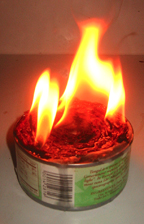
An easy craft project for the family survivalist, taken from the brilliant 1970’s Mormon classic: Roughing it Easy, by Dian Thomas.
A buddy burner is a heat source for camping or emergencies made out of a tuna can, candle stubs and cardboard. It acts like a Sterno can, will burn for 1 1/2 - 2 hours, and can be recharged and reused.
Read the rest here.
People certainly seem to like our posts involving fire for some reason. This is an easy to make and useful preparedness item:
Buddy Burner
An easy craft project for the family survivalist, taken from the brilliant 1970’s Mormon classic: Roughing it Easy, by Dian Thomas.
A buddy burner is a heat source for camping or emergencies made out of a tuna can, candle stubs and cardboard. It acts like a Sterno can, will burn for 1 1/2 - 2 hours, and can be recharged and reused.
Read the rest here.


Friday, November 09, 2012
Root Simple Blog Work Alert: New Look Coming Soon

A note that we are about to switch over this blog from Blogger to Wordpress. Other than a new look, most of you should not notice a difference. The blog may disappear for between a few minutes to a few hours.
Root Simple's Greatest Hits: The Whip: A Homemade Moisturizer How-To from Making It
While we're working on the new look of Root Simple we thought we'd
review our most popular posts in terms of hits. And just a note that
during our redesign we have to shut down commenting. In the meantime, you are welcome to leave comments on the Root Simple Facebook page.
A Homemade Moisturizer How-To from Making It

Mrs. Homegrown here:
Confession: I can't live without my homemade moisturizer. This is not true of all things. I like take-out food sometimes, and I prefer Ibuprofen to willow bark tea. However, I'll never go back to store bought lotion.
This recipe appears in Making It as Olive Oil Whip. It's my every day body lotion/face cream and I figured it was about time to share it with you. It only has three ingredients. It's safe and wholesome and very effective. Heck, you could eat it!
Read the rest here.
A Homemade Moisturizer How-To from Making It
Mrs. Homegrown here:
Confession: I can't live without my homemade moisturizer. This is not true of all things. I like take-out food sometimes, and I prefer Ibuprofen to willow bark tea. However, I'll never go back to store bought lotion.
This recipe appears in Making It as Olive Oil Whip. It's my every day body lotion/face cream and I figured it was about time to share it with you. It only has three ingredients. It's safe and wholesome and very effective. Heck, you could eat it!
Read the rest here.
Thursday, November 08, 2012
Root Simple's Greatest Hits: A Brick Rocket Stove
While we're working on the new look of Root Simple we thought we'd
review our most popular posts in terms of hits. And just a note that
during our redesign we have to shut down commenting. In the meantime, you are welcome to leave comments on the Root Simple Facebook page.
Rocket stove info has been popular on this blog, espeically this post which dates from 2007. This brick rocket stove served us well for several years, especially when we remodeled our kitchen and had no stove for a week. I had to tear it down to make way for a new adobe oven, but I still stand behind the design.
A Brick Rocket Stove

Low-tech is the new high-tech, and the best example of the low-tech revolution is the miraculous rocket stove--a stove that makes it possible to cook with small twigs--no logs needed! Best of all rocket stoves are easy to build. We liked the idea so much that we decided to build a permanent one just off our back deck for entertaining and as a backup to our gas stove should an emergency take out our utilities.
Read the rest here.
Rocket stove info has been popular on this blog, espeically this post which dates from 2007. This brick rocket stove served us well for several years, especially when we remodeled our kitchen and had no stove for a week. I had to tear it down to make way for a new adobe oven, but I still stand behind the design.
A Brick Rocket Stove

Low-tech is the new high-tech, and the best example of the low-tech revolution is the miraculous rocket stove--a stove that makes it possible to cook with small twigs--no logs needed! Best of all rocket stoves are easy to build. We liked the idea so much that we decided to build a permanent one just off our back deck for entertaining and as a backup to our gas stove should an emergency take out our utilities.
Read the rest here.
Wednesday, November 07, 2012
Root Simple's Greatest Hits: A Rocket Stove Made With a Five Gallon Metal Bucket
While we're working on the new look of Root Simple we thought we'd review our most popular posts in terms of hits. And just a note that during our redesign we have to shut down commenting. In the meantime, you are welcome to leave comments on the Root Simple Facebook page.
A Rocket Stove Made With a Five Gallon Metal Bucket

The principle behind a rocket stove is simple--rather than cooking on an open fire, you burn wood in an insulated chimney. Rocket stoves are highly efficient and easy to make. They run on twigs, so you can avoid cutting down a whole tree just to cook dinner.
Read the rest here.
A Rocket Stove Made With a Five Gallon Metal Bucket
The principle behind a rocket stove is simple--rather than cooking on an open fire, you burn wood in an insulated chimney. Rocket stoves are highly efficient and easy to make. They run on twigs, so you can avoid cutting down a whole tree just to cook dinner.
Read the rest here.
Tuesday, November 06, 2012
All Politics Are Local

I thought it appropriate on election day to repeat one of my favorite equations for happiness--a stoic flowchart that comes via Mark Fraenfelder of BoingBoing. At the end of the day, about half of America will be happy, and half will be dismayed. All we can do is remember that beyond voting, we cannot control the outcome of the election. So a stoic would advise us to not to rail against what we cannot change or affect, but to focus on what we can change--ourselves, and our immediate environment: our household, our block, our school district, our city.
All politics are local and the good thing about local politics is that you can make a difference. For instance you can:
- start a community or school garden
- volunteer to teach gardening or food preservation
- plant trees
- build neighborhood resilience and tolerance
- create bike lanes and walking paths
- legalize backyard poultry and bees
Monday, November 05, 2012
Vote Yes on 37!

I don't normally discuss politics on this blog. I feel that the topics we discuss under the banner of homesteading--such as gardening, alternative energy, alternative transpiration, home ec, health and fitness--unite people across the political spectrum. Overall, I'd rather focus on what we can do and what we have in common rather than the constant diet of strife and discontent served up by mainstream media.
That being said, I'm going to break my own rules. I want to urge all California residents to vote yes on proposition 37. Proposition 37 will require genetically modified food products to be labelled. And that's all--it's not a ban on GMOs. If you like GMOs in your food you'll still be able to get them in your hot Cheetos. All I'm asking is to be given a choice, through labeling, as to whether I wish to buy GMO products or not.
I suspect it's preaching to the choir to endorse 37 on Root Simple, but if you have relatives and friends in the Golden State that aren't part of our backyard chicken and vegetable garden subculture, please urge them to vote for 37.
Root Simple Redesign

We're getting ready to make some big improvements to our website. Roman Jaster, the designer of our book Making It (seen at the console in the picture above taking some last minute refinements from Mrs. Homegrown), is just about to pull the switch on the new design. We're switching from Blogger to Wordpress. Our new website design will feature:
- improved search functions
- an easier to navigate interface
- improved comment moderation
- better graphic design
- podcasts
- videos
Sunday, November 04, 2012
Video Sunday: Victorian Hipsters
Two Thomas Edison films that prove the existence of fixed gear bike riding hipsters in the late Victorian era.
Saturday, November 03, 2012
Saturday Linkages: The Calm After the Storm
 |
| Got a storm damaged tree? See Trees Are Good for advice. |
DIY
Build-It-Solar Blog: A Unique DIY Solar Pool Heating Collector Using PV... http://www.builditsolarblog.com/2012/10/a-unique-diy-solar-pool-heating.html?spref=tw …
Build-It-Solar Blog: Large DIY Solar Space and Water Heating System in ... http://www.builditsolarblog.com/2012/10/large-diy-solar-space-and-water-heating.html?spref=tw …
Primitive Skills
Roland Trevino of Altadena Makes and Uses the Ancient Atlatl: http://dirttime.com/?p=2741
Gardening
What to do with storm damaged trees: http://www.treesaregood.org/pressrelease/press/firstaid.aspx …
Check out The vegetable garden by M.M. Vilmorin-Andrieux, of Paris on Google Play! Old book recommended by John Jeavons: https://play.google.com/store/books/details/Vilmorin_Andrieux_et_cie_The_vegetable_garden?id=YHQNAQAAMAAJ …
Bikes
'Getting Jerry Browned' and other new phrases for Californians http://www.latimes.com/news/opinion/opinion-la/la-ol-getting-jerry-browned-20121024,0,2854852.story …
New Urban Velo issue free online: http://www.urbanvelo.org/issue34/
The fox is guarding the hen house!
How the sugar industry defends itself against claims that sugar is unhealthy: http://boingboing.net/2012/10/31/how-the-sugar-industry-defends.html …
Billboard firm wrote L.A. proposal on signs http://www.latimes.com/news/local/la-me-1027-billboard-influence-20121027,0,1562494.story …
For these links and more, follow Root Simple on Twitter:
Follow @rootsimple
Friday, November 02, 2012
What Preparedness Lessons Did You Learn From Hurricane Sandy?

We're interested in hearing from our east coast readers about how they rode out Hurricane Sandy. How did the storm impact you? How did your preparations work out? Is there anything you would do differenlty next time?
Hurricane Sandy was a reminder to us to take a look at our preparedness. We may not have monster storms here in Los Angeles, but we certainly are overdue for a big earthquake. It's been a long time since we've taken a look at our supplies and emergency equipment. I'm considering a drill--living without power/gas/water for a few days to see what we can improve.
Update. On the Root Simple Facebook page reader Josh Barton left the following account:
I'm in the St.George area of Staten Island, about a 7 minute walk to the water. I live at the top of a hill, so I wasn't worried about flooding, but I think I should buy a raft just in case it doors ever flood in the lower parts (Esp if I move somewhere else. So it'd be good to research what areas were flooded during Irene and Sandy).
During the storm I had my phone and tablet attached to chargers until the peer went out for me at 9pm.
Because my windows face north, and the wind was blowing north, my windows were on good shape, thankfully. In the future, this is something I will always have to look in to. Before the storm I looked up how fat wind needs to travel to break windows and then I constantly checked the wind speed via the weather on my phone.
After the power went out, I hooked my phone up to a battery backup (ZaggSparq 2.0) and then went to bed shortly afterwards.
My first mistake was leaving the phone on overnight. I should have turned it off to conserve power. It used up more power than I was expecting, so I had about 2 full charges left after that.
I own a bike, thankfully, so my first priority was to go to the ferry terminal so I could either charge up there our go in to the city and find a Starbucks our Barnes & Noble to plug in to. I wasn't expecting to see the ferry terminal closed with no ETA on when it would open! That meant I was stranded inn Staten Island since I don't have a car and buses weren't running. That was a major blow for me.
The next day I decided to check out this deli I always pass on my way hone because I knew they had free wifi and I saw they had a cafe level (I've never been in there before). Thankfully, they were open, had power, and wifi!
From this I learned a few more things:
1) don't assume power will be restored anytime soon. I should have bought an emergency radio/flashlight with a hand crank generator that a phone can be plugged in to. Until I find that deli, I was concerned I would lose touch with my mother and a few close friends (I know no one on this island and very few in NYC).
2) Make note of places that have outlets. Since I was able to get on Facebook, I was able to see what others were doing for power (public libraries, and a few people grouped around a chase ATM with an outlet)
3) when going to somewhere that has an outlet, bring a power strip! Do not fall upon the mercy of waiting or being restricted to how many outlets you can use (I wanted to charge my phone, tablet, phone backup charger, and batteries).
4) either prepare emergency food ahead of time or keep an emergency food supply. Based on how Tonga have been in NYC, I'd say a week's worth of food is good.
5) something I've wanted for a while, but never had the funds for (or forgot about) is a solar powered generator. That sure would have made my life a lot easier this week!
6) have an evacuation plan. I have no idea how to get out of Staten Island by bus. I always take the ferry because it's close and convenient.
7) what happened in Breezy Point, Queens (a 6 alarm fire that destroyed a block of houses) could happen anywhere. Make sure that the stuff that's priceless too you us kept safe. Very safe. I'm lucky compared to some people!
Before moving to NYC, survival was a concern for me. It's not as easy as when you're in a house and you have more room and you can install solar panels or keep a large generator on hand. Despite this concern, I think I failed by 50%. The two big things I did right though was I have a Berkey gravity filter, so in the event there was no water, I could have easily gotten untreated water from a stream (you could also get water from a fire hydrant. A few days before the storm I saw someone filing up buckets of water from a hydrant for unknown reasons), I had an alternative means of transportation so if need be, I cold have traveled a large distance, and I was good on food.
In the future, I hope to be better prepared. I got off easy and was able to learn from this.
I typed all this out on my phone, so hopefully predictive text didn't mangle any words
Thursday, November 01, 2012
Garden and Ego Destroyed by Skunks

At the risk of turning Root Simple into a skunk complaint blog, please witness the devastation to both my ego and my small patch of rapini.
Luckily, I was able to get a picture of the perpetrator:

Skunk lessons learned the hard way:
- tightly secure vegetable beds with bird netting
- don't do a half-assed job with the hoops that support the bird netting
- don't think that "this year those skunks won't go digging for grubs."
- transplant instead of sowing directly (more work, but it just works better for me)
- lay compost on beds and let the skunks work it in with their high heels

Here's what the our new keyhole bed looks like with anti-skunk measures in place--bird netting supported by bent PVC pipe.
Now if only I could repair my crushed gardening ego
Wednesday, October 31, 2012
Book Review: The Blood of the Earth: An Essay on Magic and Peak Oil
 |
| Phoebe says that despite her midnight coat and lambent eyes, she has nothing whatsoever to do with magic. Or peak oil. And for the record, she also scorns Halloween. |
What do magic and peak oil have to do with one another? Quite a lot, actually, if you believe the author, John Michael Greer. And if you read The Blood of the Earth: An Essay on Magic and Peak Oil
 you'll probably come to agree with him, because in this book, as in all of his writing, Greer is remarkably lucid, straightforward and persuasive.
Blood of the Earth is unlike any other book you'll read on peak oil. It's challenging, honest, sobering and inspiring.
It's not a end-times book. Greer doesn't do apocalypse. Nor is it an airy-fairy "we'll save the world by the magic of positive thinking" sort of book. Instead, it is an investigation of the spiritual/psychological impulses that play out in our responses to peak oil. Part of this is understanding behavior and propaganda in magical terms. To do this, Greer offers a quick, intriguing primer on Western magic.
 Magic, according to Greer, has nothing to do
with stage magic, or the fictional magic practiced by Harry Potter and
his friends. It is a discipline of the mind, with a strong relationship
to psychology. One definition is "the art and science of causing change
in consciousness in accordance to the will." Greer sums it up better
than I can, and explains clearly what magic can and cannot do. Most
importantly he asserts magic cannot "fix" our situation. We can't change
the hard material limits of our resource crisis through magical
thinking or incantations. Magic cannot change matter.
Magic, according to Greer, has nothing to do
with stage magic, or the fictional magic practiced by Harry Potter and
his friends. It is a discipline of the mind, with a strong relationship
to psychology. One definition is "the art and science of causing change
in consciousness in accordance to the will." Greer sums it up better
than I can, and explains clearly what magic can and cannot do. Most
importantly he asserts magic cannot "fix" our situation. We can't change
the hard material limits of our resource crisis through magical
thinking or incantations. Magic cannot change matter. Magic is for changing minds--preferably your own mind. All change begins within, right? So Greer argues that we cannot rescue ourselves from this downward spiral of denial and non-action by activism alone. We have to knuckle down and change ourselves.
Too often we ask for change, and then point to others and say they have to change. Stop those other people from using so much energy, please. Or we blame politicians. Or we hold on to hope we won't have to change, not really, because science will save us. We'll come up with a better energy source, soon right? Or we'll find more oil. There's always more oil.
Greer asks us to free ourselves of these delusions and live clear-eyed in the reality of the situation. He lays out concrete suggestions on how we can change our own minds, and thus our behavior, to prepare realistically for the coming hard times. And beyond that, to find joy and deep meaning in the post-petroleum world, by celebrating the potential of the human rather than the potential of machines.
For such short book, the ideas big and far-ranging.
At the risk of this being a spoiler, I'm going to share with you an exercise of sorts from the end of the book, three suggestions for practical action that you can take now. I'm sharing these because I think they show how down-to-earth and practical his thinking is, and how it will appeal to Root Simple readers. Greer explores these ideas in more depth, but I think you'll get the picture:
Learn One Thing: Learn a practical skill, so that you have something trade in a barter economy.
Give Up One Thing: Choose one material possession that you believe you depend on, and that you also know is quite dependent itself on our complex, petroleum-fueled industrial system. Go without it now, so you know it's possible. And that really, it's not that bad to go without.
Save One Thing: Consider how wide reaching our knowledge base is now, yet how fragile, since so much of our knowledge is tied up in digital media. Choose one thing you want to be able to pass on to future generations. Maybe it's a book, or a song, a philosophy, or a craft technique. Find some way to preserve it and pass it on.
The one drawback to this book is that it is not cheap. The publisher, Scarlet Imprint, is offering it in three forms. Two--a gorgeous leather bound edition and a handsome cloth-bound edition--are tempting, but out of my price range. The paperback was even expensive, but I justified it as a birthday gift for Erik. (A gift we could both enjoy! I'm ever-thoughtful.) I ended up buying directly from the publisher. I saw no price break anywhere else and figured all of my money may as well go there, rather than to a middleman. The least expensive option is the digital book, but at 10.00 GBP it is no steal, either. All forms of the book are available on this here page.
The paperback version is (sorta)(sometimes) available at Amazon.
A good, free way to get to know Geer's thinking is to read the archive of his weekly blog, The Archdruid Report. Right now he's doing something a little different: a series of fictional pieces to illustrate some of the ideas he's been working on lately. But you'll find many of the concepts from The Blood of the Earth in his older blog posts, especially those over, say, the last two years or so (2010-2012).
Happy Halloween!

Halloween greetings from all the denizens of the Root Simple compound, living and dead.
(I believe this lovely old photo that I found haunting my hard drive is from the book Haunted Air
 a collection of old Halloween photos. Halloween used to be homemade--and a lot more scary.)
Tuesday, October 30, 2012
Chairs, are they killing us?
 |
| Even American cats sit in chairs. |
The knee injuries I've accumulated running, hiking and fencing have a lot to do with basic flexibility problems. Mrs. Root Simple likens my inflexibility to that of a ginger bread man or a 2 by 4 pitched into a swimming pool. So should I plant my stiff derriere on the nearest yoga mat? Or should I throw out all our furniture? I'm thinking the latter. Let me explain.
 |
| Photo from Max in Kabul |
I'm willing to bet that traditional societies that don't use chairs have fewer flexibility problems later in life. I'm reminded of a dinner I attended at an Afghan co-worker's house in San Diego many years ago. We spent a few minutes in a typical suburban living room. The rest of the evening, however, took place in a room of the house that had only an Afghan rug and some pillows--no chairs or tables--where we sat for several hours listening to a concert of classical Afghan music. It was a lot like the picture above. Everyone, young and old, sat on the floor, cross-legged for the entirety of the concert. Imagine a group of Americans sitting down to a Thanksgiving dinner like this. And we wonder why Americans injure themselves doing yoga?
I have to ask what exactly do chairs do for us? Are they just about status, a kind of throne envy? I'm willing to bet that elderly people in chair-less traditional societies fall down less and have fewer joint problems.
 |
| Arakawa + Gins, Bioscleave House (Lifespan Extending Villa),2004, photo: Léopold Lambert |
Maverick architects Madeline Gins and her partner, the late Arakawa (he only used his last name) had the idea that our houses should not be comfortable in the western sense of having lots of couches, chairs and ease of access. Rather, they designed off-kilter floors, awkward doorways and dangerous staircases with the idea that being forced to be more active would give us longer, healthier lives.
Gins and Arakawa were being deliberately provocative to make a point. I don't think we have to be as extreme. But will I have the courage to turn the Root Simple headquarters into something more like a traditional Afghan abode? Will I ditch the chairs? Will I lower the desk I'm writing this blog post at? Let's hope so.
If you do the Pinterest thing, I've started an idea board of chair free living spaces.
Monday, October 29, 2012
The Best Raw Flax Cracker Recipe

I have to admit to not being a huge fan of the raw food movement. Now I think we should all eat some raw food, but many nutrients are accessible only through cooking. That being said, I like a few recipes that came out of the raw craze, especially flax crackers. My favorite flax cracker recipe is the onion cracker bread you can find here.
This easy to make recipe requires no pre-soaking or sprouting. All you do is mix the ingredients (onions, flax seed, sunflower seeds, olive oil and agave syrup) in a bowl and spread it on a tray in your dehydrator.
The problem is that these crackers are so tasty they disappear within a day.
Do you have a favorite raw recipe? Leave a comment with a link!
Sunday, October 28, 2012
Picture Sundays: A Chicken Coop Made From a Trampoline

From the Homesteading/Survivalism Facebook page, a chicken coop made from a trampoline. Here's a little more on the project.
This coop appears to be a DIY variation on the Joel Salatin movable poultry pen. I'm assuming there's a way to lock the chickens in the top part at night to keep out critters that might dig under the run.
Saturday, October 27, 2012
Saturday Linkages: Fueling Up
 |
| Only in India |
DIY
Six ways to reuse plastic mesh bags: http://collectedquotidian.com/2012/10/21/six-ways-to-reuse-plastic-mesh-produce-bags/ …
How I Work: I'm Mark Frauenfelder, Editor-In-Chief of MAKE Magazine, and This Is How I Work - http://lifehacker.com/5954275/im-mark-frauenfelder-editor+in+chief-of-make-magazine-and-this-is-how-i-work …
Free Heat for Your Home: Homemade Briquettes and Logs http://naturalbuildingblog.com/free-heat-for-your-home-homemade-briquettes-and-logs/ …
Thoughtstylings
Mark Bittman: A Simple Fix for Farming http://nyti.ms/VjNlZb
Fueling up: http://we2our2.blogspot.com/2012/10/fueling-up.html …
Health
The Island Where People Forget to Die http://nyti.ms/S3Mitk
Bikes
Nice graphic showing why taking the lane is a good idea. http://ow.ly/eIgHH (via Commute Orlando)
From the Root Simple Archive
Appletastic Apple Cake http://www.rootsimple.com/2010/12/applet
For these links and more, follow Root Simple on Twitter:
Follow @rootsimple
Friday, October 26, 2012
Pomegranate Factoids
 |
| Our pomegranate tree this morning. |
Since we've had a few pomegrante questions coming in in the past week (it's the tail end of harvest time) I thought I'd provide a link to more information on growing pomegranates than you'll ever need to know courtesy of UC Davis.
If you live in a hot, dry climate that doesn't freeze much you should get yourself a pomegranate tree. They'll grow in more humid climates but may not produce much fruit. Ours took five years, from planting as a bare root tree, to get the modest crop you see in the picture.
It's one of my favorite trees--delicious fruit, a red flowers in the spring and a gorgeous display of yellow leaves in the fall--what more could you ask for?
If you've been successful growing pomegranates outside of California (and worldwide) leave a comment letting us know where you live. I'm curious about the range of this tree.
Thursday, October 25, 2012
Chicken Nipple Waterering Systems

A question came in this week from a reader who has tried our deep bedding suggestion but is having trouble keeping the chicken waterer clean as a result. Chickens are certainly expert at fouling (fowling?) their water source. Which is why many people use nipple waterers like the one above. Chickens learn to use them quickly (they like to peck at things, after all).
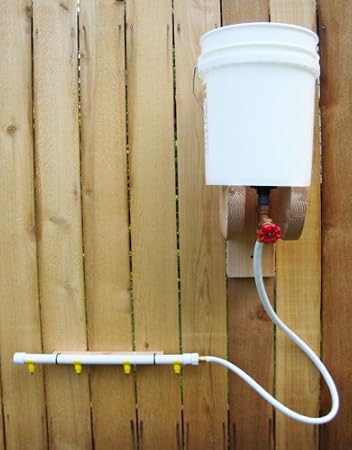
I've seen two DIY options: the simplest is a suspended five gallon bucket with nipples stuck in the bottom (as in the image at top), and the other is a five gallon bucket hooked up to a pipe with a line of nipples (as in the second image).
American Preppers Network blogger Stephanie Dayle has instuctions for making a bucket and pipe system here. You can purchase the nipples on Amazon. And the bucket and pipe system pictured above is being sold on Amazon here (I have not tested it).
Ideally all the parts should be food grade as I'm not a fan of PVC. Of course the zinc in the galvanized waterer is probably not so great either, so it's probably another case of not letting perfection be the enemy of the good.
Living in Los Angeles all my life I'm no expert on what to do with poultry nipple waterers when it freezes. I imagine it has to be drained and put away for the winter but please chime in if you have other ideas. And, in my own case, I think I'd keep my standard waterer as a backup. These poultry nipple contraptions have a tendency to leak and I'd hate to lose chickens on a 100º F day because my waterer failed while I was sipping lattes down on Sunset Boulevard (at some hip new human coffee nipple waterer bar, presumably).
Wednesday, October 24, 2012
Plants: When to Hold Them, When to Fold Them

One of the most difficult lessons to learn about gardens is that they are not permanent. As Heraclitus says, "all things are flowing."
The best gardeners I know don't suffer the attachments to plants that I do. They are much more ruthless. If a tree is in the wrong place it gets cut down. If two plants are too close together one gets ripped out.
 |
| What Pierce's disease looks like. |
I'm trying to get the hang of this lack of attachment. This fall I get to rip out a grape vine that has graced our entrance arbor for a few years now. It's a muscat of Alexandria that produced a few delicious grapes before succumbing to incurable Pierce's disease. I planted this vine thinking that it was a resistant variety. It's not. The leaves, drying from the outside and the stems with alternating dark brown patches are telltale signs of Pierce's. It's gotta go and I've already ordered a climbing rose to replace it.
So radical gardeners, what are you changing out this coming year?
Tuesday, October 23, 2012
Steve Solomon's Soil and Health e-Library

I'm really enjoying the incredible variety of obscure old books being scanned and put up on the interwebs. Of interest to readers of this blog will be the archive of free e-books maintained by gardening author Steve Solomon. His Soil and Health e-library contains books on "holistic agriculture, holistic health and self-sufficient homestead living" You can download the books for free, but Solomon requests a modest $13 donation. You can find this amazing resource at: www.soilandhealth.org.
The "Radical Agriculture" part of the archive contains many early organic ag classics by authors such as Sir Albert Howard, J.I. Rodale and Ehrenfried Pfeiffer. The "Homesteading" part of the library contains tomes dating from the 1700s (William Ellis' The Country Housewife's Family Companion), all the way to the appropriate technology movement of the 1970s (Gene Logsdon's Getting Food From Water: A guide to Backyard Aquaculture).
So go load up those e-readers. Or maybe print them out in case we have a revolution.
Monday, October 22, 2012
Row Cover as an Insect Barrier
 |
| It ain't pretty but it works. |
As one would expect, cabbage leaf worms love cabbage and nearly every other member of the brassica species. Which is why I've become a real fan of row cover material as an insect barrier.
 |
| The perp in question. |
It rarely freezes here so I use the thinnest row cover possible, specifically a product called Agribon-15. If you live in a cooler climate and want to use row cover for frost protection you would use a thicker product such as Agribon-30. Johnny's Select Seeds carries Agribon row cover in lengths as short as 50 feet--plenty for an urban or suburban garden. I've used both PVC pipe and chain link fence tension wire as support. I secure the row cover down with pieces of rebar and bricks to keep out skunks.
 |
| What cabbage worms become. |
It's not a plug and play solution, however. If it gets hot I have to remember to pull the row cover off. And the added humidity can cause outbreaks of aphids. But overall, it works great. I've found that I just need to use it when tender seedlings are getting established. Once they have a fighting chance against the cabbage worms I can pull it off.
Sunday, October 21, 2012
Picture Sundays: Why Cats Purr

Some solid science here. Not sure where this comes from, but spotted it on Doug Harvey's Facebook page.
Saturday, October 20, 2012
Saturday Linkages: Don't seek the truth - just drop your opinions
DIY
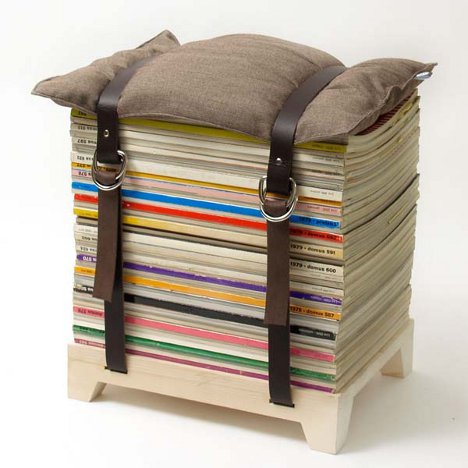
Rear-cycling: Minimalist Stool Grows With Old Magazines | Designs & Ideas on Dornob http://dornob.com/rear-cycling-minimalist-stool-grows-with-old-magazines/ …
Bastard chairs of China: http://boingboing.net/2012/10/15/bastard-chairs-of-china.html …
Tiny Home With Metal Siding in Texas http://lloydkahn-ongoing.blogspot.com/2012/10/tiny-home-with-metal-siding-in-texas.html#.UIBNRCkp2Ys.twitter …
Life is swell in a fallout shelter!: http://boingboing.net/2012/10/17/life-is-swell-in-a-fall.html …
Small, Flat-bottomed Sailboat http://lloydkahn-ongoing.blogspot.com/2012/10/small-flat-bottomed-sailboat.html#.UH78qIIo7TY.twitter …
Car Tent for stealth city camping: Geekologie http://www.geekologie.com/2007/06/car-tent.php …
Thoughtstylings
Heirloom Apples, Heritage Orchards & Cideries Bring Back Food Diversity and Jobs to Our Communities http://j.mp/VkvZvh
World Food Day: A Franciscan Prayer Service on Behalf of Farmers, Farmworkers & Fishers in a Year of Drought http://j.mp/VkvRfl
Zen saying: Don't seek the truth - just drop your opinions.
Health and Fitness
Fencing may help improve some cognitive functions in older people - Los Angeles Times http://www.latimes.com/la-heb-fencing-cogitive-improvement-20111230,0,1166016.story …
Gardening
Garden planter turns out to be Roman antique: http://boingboing.net/2012/10/12/garden-planter-turns-out-to-be.html …
Best Reporting on the Space Shuttle Tree Debacle
Science Center Given Approval to Remove Nearly 400 Trees to Make Way for Shuttle http://la.streetsblog.org/2012/09/18/science-center-given-approval-to-remove-nearly-400-trees-to-make-way-for-shuttle/#.UHkCZyjj5iQ.twitter …
For these links and more, follow Root Simple on Twitter:
Follow @rootsimple
Friday, October 19, 2012
Joshua Tree Earthen Oven Class
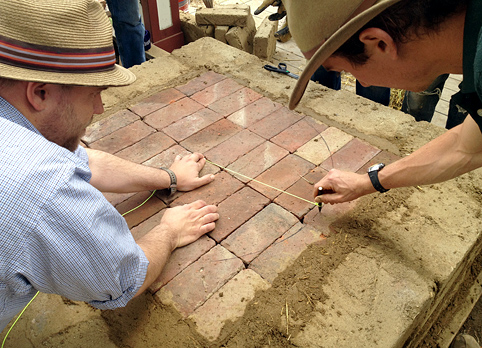
Kurt Gardella, who led an earth oven workshop in our backyard is teaching another class in November. Our oven turned out great and was amazingly inexpensive (just the cost of sand). Kurt is a great teacher and if you'd like to build your own oven while learning the art of adobe, this class is not to be missed. Here's info on the class:
Joshua Tree Earthen Oven Class
November 2–4, 2012
Earthen ovens are inexpensive to build, fun to use, and provide baking environment impossible to recreate in the kitchen. This Fall, Kurt Gardella returns to California for three days to teach you how to make your own earthen oven. Kurt has built dozens of these ovens in New Mexico, and has great expertise in both adobe construction and earthen plasters and finishes. Attendees will leave the class with the knowledge necessary to built an oven of their own, with materials that you may already have in your yard.
The class is suitable for bakers, building professionals and do-it-your-selfers, and is a great introduction to adobe construction and earthen plasters covered in more depth in adobeisnotsoftware’s other classes.
Topics Include:
- Local considerations and the siting your earthen oven
- Soil and material selection, sourcing and testing
- Foundations and oven base design and materials
- Sizing
- Sand Form and Oven Domes
- Natural oven plasters and finishes
- Firing and baking in your oven.
This is a hands-on class. Attendees will have the opportunity to get dirty and use tools and equipment typical of adobe construction and earthen finishing. Due to the course format, enrollment will be limited to 10 individuals. In the unlikely event of inclement weather, instruction will occur indoors.
Instructors: Kurt Gardella teaches adobe construction at Northern New Mexico College, is Director of Education for Adobe in Action, and is certified as an earth-building specialist by the German Dachverband Lehm.
Ben Loescher is a licensed architect, founder of adobeisnotsoftware and principal of golem|la, an architecture firm specializing in adobe construction.
Kurt Gardella measures the radius of the horno dome.
Location:
The class will be conducted in the area of Joshua Tree. Coffee and nibbles will be provided at the beginning of the day; lunch is included.
For more info on the class and to register go to Adobe is Not Software.
Questions?
Please do not hesitate to contact Ben by email at mud[at]adobeisnotsoftware.org or by phone at (760) 278-1134.
A New and Improved Self Irrigating Pot System
A very cool improvement on the self irrigating pot (SIP) idea from Larry Hall of Minnesota. Rather than the two bucket system we've blogged about in the past (see a roundup of our SIP resources here), Hall uses one long rain gutter to supply water. He's even got a clever double rain gutter system for growing strawberries that I'm tempted to try on our back patio.
I spotted this video on Inside Urban Green always a good source for SIP related news.
Thursday, October 18, 2012
Social Media as a Homesteading Tool

One of the things I love most about this blog is that I get instant feedback and advice. Yesterday I asked for a source for olive trees and Ginny (thank you Ginny) left a comment with the address of a nursery I did not know about. An hour after reader her comment, I came home with a small Frantoio olive tree. Exactly what I was looking for.
I would never have found this tree without blogging. Blogging is a great way to keep notes on what you're doing and connect with other like minded people. Should blogging interest you I recommend going with Wordpress over Blogger. We're going to switch over next month. And set a deadline for yourself--blog at least three times a week.
While there are many things to dislike about Facebook (principally that those of us who use it are doing free market research on ourselves), it has proven useful for me on many occasions. I've used it to solicit gardening advice, find a place to celebrate a birthday, borrow a guitar and keep up with friends and family. And I've learned a lot from what Facebook friends have posted about their homesteading adventures. Yes, the privacy issues are alarming but, having written two books now, our life is public anyways.
I think that it's healthy to look at new technology critically and to take a break both daily and monthly from all the screen time we seem to accumulate. And I'm not a fan of cell phones, even though I own one. They seem like tracking devices with phone privileges to me. Perhaps some of you will show me the smart use of a smart phone. But I also believe the Luddite path is a dead end.
If you write a homesteading/gardening/cooking/home ec blog, or know of a good one leave a link to it in the comments. And friend Root Simple in Facebook here.
Wednesday, October 17, 2012
Sources for Interesting Perennial Crops
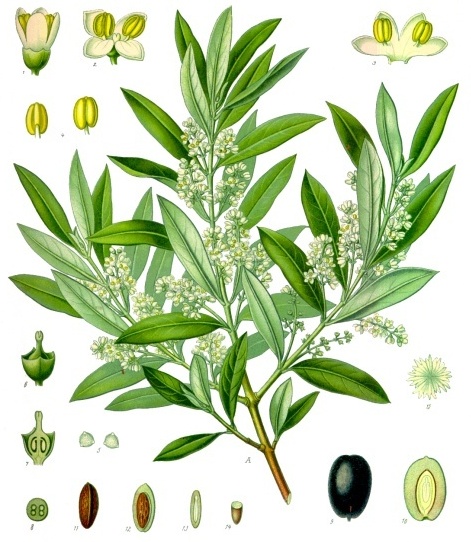
A fruitless search for a fruiting olive tree caused an existential crisis here at the Root Simple compound. With a few exceptions, most nurseries in Los Angeles cater to the mow and blow set. You're more likely to find parts for your leaf blower and a flat of petunias than anything worth growing. Good luck finding olives.
In the midst of my frustration I stumbled upon a interesting list, put together by the USDA, of retail nurseries and perennial crop resources. You can view that list here. Here's three sources I found particularly interesting from that list:
California Rare Fruit Growers Member Nurseries and fruit sources
CRFG members are always on the hunt for interesting varieties of fruits. Note that this list of nurseries covers the entire US, not just California.
Permaculture Activist plant sources
The website is somewhat of a graphic design nightmare, but if you're looking for unusual edible perennials, this would be the place to start.
Hop Roots - where to get them...
Hoptacular! A list of hops nurseries from the Oregon State Hops Commision.
Also note that the USDA maintains a huge collection of fruit trees, nut trees and many other crops at thirty-two federally funded repositories around the United States. At least one of those facilities, the National Clonal Germplasm Repository for Fruit and Nut Crops in Davis, CA, will send out scion wood when available (researchers get first dibs). They appreciate a Fed Ex number so they don't have to pay for shipping. Of course you have to know how to graft and be ready with root stock.
Now if you can help me find a source of olive trees other than arbequina in Southern California, please leave a comment!
Tuesday, October 16, 2012
Genetically Engineered Crops Increase Use of Pesticides

A new study authored by Charles M Benbrook of Washington State University, "Impacts of genetically engineered crops on pesticide use in the U.S. -- the first sixteen years," found troubling evidence that the use of genetically modified crops leads to greater pesticide use. This peer reviewed paper concludes,
Contrary to often-repeated claims that today’s genetically-engineered crops have, and are reducing pesticide use, the spread of glyphosate-resistant weeds in herbicide-resistant weed management systems has brought about substantial increases in the number and volume of herbicides applied. If new genetically engineered forms of corn and soybeans tolerant of 2,4- D are approved, the volume of 2,4-D sprayed could drive herbicide usage upward by another approximate 50%. The magnitude of increases in herbicide use on herbicide-resistant hectares has dwarfed the reduction in insecticide use on Bt crops over the past 16 years, and will continue to do so for the foreseeable future.My two cents about genetically engineered ag: I've always thought the best arguement against GMOs relates to unintended consequences. The novelty of genetic modification, when compared to the slower pace of conventional plant breeding, is a perfect way to generate "black swans". This is why I'll be voting for Proposition 37 which will mandate the labeling of genetically engineered products in California.
Via The Garden Professors.
Monday, October 15, 2012
The Fine Art of Worm Grunting
For your Monday viewing pleasure we have two videos showing worm grunting in Florida.
Worm grunting is a technique used to lure worms out of the soil to collect as fishing bait. Basically, you take a stick (called a "stob"), pound it into the ground and rub a metal rod (known as a "rooping iron") against the top of the stob. The deep vibrations are said to mimic the sound of burrowing moles, the natural predator of worms. When they sense the vibrations, the panicked worms crawl to the surface of the soil. (The high population of earthworms in the area profiled, upwards of 1 million per acre, makes grunting a sustainable practice.)
In England, grunting is called "worm charming". And yes, there are competitions--in Sopchoppy, Florida, Shelburne, Ontario, and South Devon, England.
Kelly adds: Attn: geeks! After viewing, shall we discuss whether Dune author Frank Herbert knew about grunting...er...thumping? Were the Shai-Hulud fleeing even more terrifying SandVoles?
Sunday, October 14, 2012
Picture Sundays: The Vigo County Canning Club
 |
| Vigo County Canning Club, Indiana 1918. Via Kaufmann Mercantile. |
I hope we'll be seeing more food preservation clubs in the years to come. They make a lot of sense. You can pool resources, labor and expertise. No need to be nostalgic, this is an idea for the present and future.
Saturday, October 13, 2012
Saturday Linkages: Will Your Next House Be Built With Mushrooms?
 |
| Fast Fungi Bricks via Dornob |
Gardening
What I am reading from the Los Angeles Public Library: Organic Olives http://catalog.lapl.org/carlweb/jsp/DoSearch?databaseID=965&terms=5013187&index=z …
Garden planter turns out to be Roman antique: http://boingboing.net/2012/10/12/garden-planter-turns-out-to-be.html …
DIY
North House Folk School http://lloydkahn-ongoing.blogspot.com/2012/10/north-house-folk-school.html#.UHTSPhsTC2o.twitter …
HOWTO make a sandwich caddy out of a milk jug: http://boingboing.net/2012/10/08/howto-make-a-sandwich-caddy-ou.html …
Preparedness
Tegaderm 3M product for applying dressing over bleeding injury: http://boingboing.net/2012/10/11/tegaderm.html …
How to Tell Time Like a Soldier | The Art of Manliness http://artofmanliness.com/2012/10/11/how-to-tell-time-like-a-soldier/ …
DesignFast Fungi Bricks: Mushroom Blocks Better than Concrete?! | Designs & Ideas on Dornob http://dornob.com/fast-fungi-bricks-mushroom-blocks-better-than-concrete/ …
For these links and more, follow Root Simple on Twitter:
Follow @rootsimple
Friday, October 12, 2012
Homesteading Disasters: The Skunk Menace

Franky, I think our mistakes are more interesting and educational than the high-horse blog posts we typically churn out. I'm hoping, in fact, to collect our misadventures into a little booklet of homesteading disasters. To that end, I'll periodically write about the latest problem around the Root Simple Compound starting today with how fun it is to garden with skunks.
 |
| Angry red arrows mark skunk dig sites in our new keyhole bed. |
I know that I've got a skunk problem. Yet each year when I sow lettuce seeds I get lazy about putting up the required bird net barrier over the beds. Or I haphazardly put it up, thinking that the skunks aren't smart enough to squeeze through any gaps. And each year I wake up the morning after planting to a kind of vegetable garden apocalypse--dozens of V shaped holes, overturned seedlings and scattered seeds. And each year I swear off vegetable gardening entirely.
 |
| Actual photo of absent-minded conquistadors. |
So what's the science behind this? Why do skunks dig? Skunks dig for doubloons dropped by absent-minded conquistadors many generations ago here in California. Our gardens in Los Angeles are thick in doubloons. In fact, if it weren't for my metal detector I'd never be able to pay our inflated mortgage. Remember, our crumbling 92 year old bungalow (located in the "hippest neighborhood in America" according to Forbes Magazine) cost more than an entire town in Kansas. So these damn skunks are not only ruining my vegetables, but they are taking a big bite out of our house payments.*
The moral here: you gotta make time to fence off the veggies. For us that means hoops with bird netting carefully stretched out and held down by bricks. There's no easy way out short of hiring 24 hour guards (off duty conquistadors perhaps?) And let's not even talk about the deer menace (which, thankfully, we don't have)! Deer harassed readers are welcome to share their horror stories in the comments.
More on that kooky new keyhole garden in another post . . .
*Ed. note: Skunks are actually digging for insects. The irony is that better soil (moist, rich with life, etc.) invariably attracts skunks. In that way, you may wish to consider skunk attacks a sign of gardening success.
Thursday, October 11, 2012
Poultry Houses of the Ultra Welathy Part 2

Are $100,000 chicken coops a sign of an empire on the verge of a decadent downward spiral? If so it's time to get that bug-out location ready because Neiman Marcus publicity flacks just announced a $100,000 "Heritage Hen Mini-Farm." From the description on their website:
Dawn breaks. The hens descend from their bespoke Versailles-inspired Le Petit Trianon house to their playground below for a morning wing stretch. Slipping on your wellies, you start for the coop and are greeted by the pleasant clucking of your specially chosen flock and the site of the poshest hen house ever imagined. Your custom-made multilevel dwelling features a nesting area, a "living room" for nighttime roosting, a broody room, a library filled with chicken and gardening books for visitors of the human kind, and, of course, an elegant chandelier. The environment suits them well as you notice the fresh eggs awaiting morning collection. Nearby, you pick fresh vegetables or herbs from your custom-built raised gardens. You've always fancied yourself a farmer—now thanks to Heritage Hen Farm, you're doing it in the fanciest way possible!The Neiman Marcus folks apparently didn't get the memo on what happened to the original owner of Le Petit Trianon. Those angry mobs of real French peasants weren't all too happy with a royal family of pretend farmers. Will Neiman Marcus offer a diamond encrusted Gucci guillotine when the chicken coop class war breaks out?
And, in my humble opinion, British hedge fund manager Crispin Odey has a better coop.
Thanks to Root Simple reader Birdzilla Studios for the tip!
Subscribe to:
Posts (Atom)