Showing posts with label fruit. Show all posts

Friday, October 26, 2012

Pomegranate Factoids

Our pomegranate tree this morning.

Since we've had a few pomegrante questions coming in in the past week (it's the tail end of harvest time) I thought I'd provide a link to more information on growing pomegranates than you'll ever need to know courtesy of UC Davis.

If you live in a hot, dry climate that doesn't freeze much you should get yourself a pomegranate tree. They'll grow in more humid climates but may not produce much fruit. Ours took five years, from planting as a bare root tree, to get the  modest crop you see in the picture.

It's one of my favorite trees--delicious fruit, a red flowers in the spring and a gorgeous display of yellow leaves in the fall--what more could you ask for?

If you've been successful growing pomegranates outside of California (and worldwide) leave a comment letting us know where you live. I'm curious about the range of this tree.

Wednesday, October 17, 2012

Sources for Interesting Perennial Crops


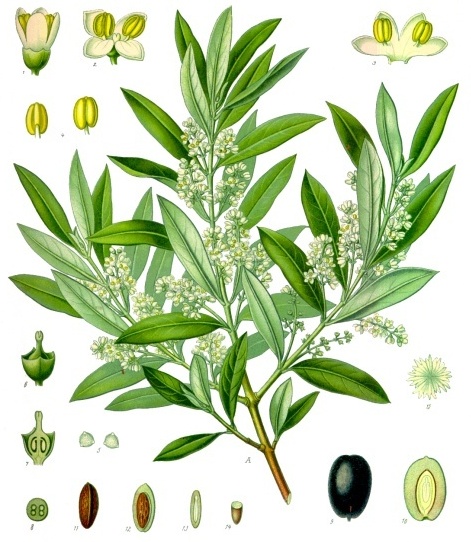
A fruitless search for a fruiting olive tree caused an existential crisis here at the Root Simple compound. With a few exceptions, most nurseries in Los Angeles cater to the mow and blow set. You're more likely to find parts for your leaf blower and a flat of petunias than anything worth growing. Good luck finding olives.

In the midst of my frustration I stumbled upon a interesting list, put together by the USDA, of retail nurseries and perennial crop resources. You can view that list here. Here's three sources I found particularly interesting from that list:

California Rare Fruit Growers Member Nurseries and fruit sources
CRFG members are always on the hunt for interesting varieties of fruits. Note that this list of nurseries covers the entire US, not just California.

Permaculture Activist plant sources
The website is somewhat of a graphic design nightmare, but if you're looking for unusual edible perennials, this would be the place to start.

Hop Roots - where to get them... 
Hoptacular! A list of hops nurseries from the Oregon State Hops Commision.

Also note that the USDA maintains a huge collection of fruit trees, nut trees and many other crops at thirty-two federally funded repositories around the United States. At least one of those facilities, the National Clonal Germplasm Repository for Fruit and Nut Crops in Davis, CA, will send out scion wood when available (researchers get first dibs). They appreciate a Fed Ex number so they don't have to pay for shipping. Of course you have to know how to graft and be ready with root stock.

Now if you can help me find a source of olive trees other than arbequina in Southern California, please leave a comment!

Wednesday, October 03, 2012

How to Order Bare Root Fruit Trees

The trees we planted in 2011--all doing well now.

Ladies and gentleman, it's time to get your bare root fruit tree orders in! The massive wave of common sense that's swept over the world since the 2008 econopocolypse has got people thinking about planting trees that provide more than just shade. Last year many nurseries ran out of stock. And bare root trees are a great way to save money. The time to order, for delivery next year, is now. Some tips:
  • Choose carefully--talk to people in your area with fruit trees and see what grows well. Visit botanical gardens, community gardens or talk to farmers in your area.
  • Plant varieties you can't buy at the supermarket.
  • Consider aesthetics. I planted a Red Baron peach in my mom's yard and the tree not only produces delicious fruit, but it also puts on a spectacular display of flowers in the spring.
  • Pay attention to root stock and cross-pollination requirements.
  • Check out the Dave Wilson nursery's Backyard Orchard Culture Guide for how to turn a small backyard into a mini-orchard.
  • Order online for the best selection. Bare root trees ship well. Our favorite online nursery is Bay Laurel.
  • Use the Dave Wilson fruit and nut harvest date chart to maximize the number of months you'll have fruit. 
  • When selecting trees plan for warmer temperatures. The USDA's new zone map, according to some, is already out of date. Many places will soon bump up another zone. Take this into account when calculating your chill hours.
Most importantly, get going! One of the big regrets with our property is that we didn't start planting fruit trees until just a few years ago. Knowing what we know now, we'd get started right away. Fruit trees take a lot less time and care than vegetables. And there's nothing like the taste of a fresh nectaplum!.

Thursday, September 20, 2012

Feijoa Fever

Image from Wikipedia

If you're lucky enough to live where you can grow it, pineapple guava (Acca sellowiana) is a beautiful tree. Evergreen, the leaves are dark green on top and silvery gray on the bottom. In the spring you get hundreds of pink and red, edible flowers (they actually taste like cotton candy). In the fall you get copious amounts of green fruit, high in pectin and sugar.  When I've seen pineapple guavas in our local supermarket they are priced at nearly $2 a piece. I planted one a few years ago in our front yard.

Image from Wikipedia

Last Thursday morning at the at the National Heirloom Exposition Mark Albert, a pineapple guava expert, gave a lecture on "Developments in Pineapple Guava." Those developments are, interestingly, entirely in the hands of amateur growers like Albert. Pineapple guavas are not part of any government breeding program. And the tree has really only been domesticated in the last 100 years or so. There's a confusing jumble of named varieties and considerable disagreement on how you even propagate them. During his lecture, Albert dropped a bunch of factoids of interest to pineapple guava obsessed fruit geeks such as me:
  • First, how to pronounce the Portuguese name for the fruit: feijoa - fay--ee--joe--ah
  • Don't pick from the tree--wait for it to fall to the ground.
  • Pineapple guava is very drought tolerant but needs summer water if you want fruit.
  • Albert's prefers to propagate from seed.
  • Pineapple guava's origins are in Uruguay. The region it comes from sometimes does not receive any rain in three years. It's also the climax species in this arid region.
  • The Spanish name for pineapple guava is Guayabo del país or wild guava. 
  • Albert, who lives in Mendocino County in Northern California (about as far north as you can grow this tree) propagates the seeds by soaking pulp in water for a few months and planting the seeds when it warms up in the springtime.   
If you live where it never gets below 15ºF, consider giving this gorgeous tree a place in your garden.

More info from the California Rare Fruit Growers on pineapple guava here. 

Monday, May 21, 2012

Bleach Alternatives for Disinfecting Pruning Shears

Apples with fire blight: one reason you should disinfect pruning sheers. Photo by Peggy Greb

Neighbor Anne tipped me off to an interesting fact sheet on disinfecting pruning sheers by Dr. Linda Chalker-Scott, a horticulture professor at Washington State University. I've been using bleach which, it turns out, is not the best choice.

Bleach is both toxic to humans and to plants as well. It also stains clothes and damages tools. Chalker-Scott's preferred alternative? Lysol. It won't corrode your tools and is safer to humans. She also discusses alcohol and Lysterine and a few other choices.

The fact sheet concludes with more important details:
• Be sure to clean tools of dirt, debris, etc. before disinfecting.
• After dipping your pruning tools, be sure to wipe away excess disinfectant to avoid injuring
the next plant.
• A longer soaking may be needed for pruning surfaces that are not smooth.
• Like pruners, increment borers should always be sterilized before and after use.
• Never use disinfectants on pruning wounds; they are phytotoxic and cause more harm than good.

(Why do you need to disinfect pruning tools? Because if you don't, you can transmit disease such as fire blight and dutch elm disease from one tree to the next. It's best to clean your tools between each tree or shrub as you work. We do this as a matter of course, whether we think a plant is diseased or not. It's like practicing safe sex.)

For more horticultral myths, see Chalker-Scott's myth page.

Monday, May 07, 2012

Loquat Leather Recipe


Our neighborhood is full of loquat (Eriobotrya japonica) trees. For years I've been trying to figure out a way to use them. Loquats, a warm climate relative of the apple tree, produce tons of fruit all at once that do not keep well fresh. Thus the need to preserve the fruit. Unfortunately, they are also a chore to process--small large seeds and skins that are difficult to peel. They also vary widely in quality, since many in the neighborhood are probably seeds planted by birds and squirrels rather than grafted specimens.

But at last, I've found a use for them that's repetitively low-labor and yields a tasty result: loquat leather. Here's the recipe I came up with:

2 cups loquats (no need to peel)
2 teaspoons lemon juice
2 teaspoons agave syrup
1 teaspoon triple sec

Remove seeds. Place loquats in a blender with the lemon juice, agave syrup and triple sec. Dehydrate at 135º until, as the Colorado Extension Service puts it, "translucent and slightly tacky to the touch, but easily peeled from the pan."

Tips: Chef Ernie Miller suggested using a blender is rather than a food processor for this recipe. Also, try to spread the puree thicker towards the edges of the dehydrator sheet and you'll get a more uniform result. Finally, the triple sec is optional, but some sort of flavor addition gives your fruit leather a more "adult" taste.

Fellow Master Food Preserver trainee Emily Ho is working on a loquat soda syrup and has also made some loquat jelly.

Thursday, December 15, 2011

Chill Hour Calculator for California


Please excuse another California-centric post, but if you're in the Golden State and like to geek out on keeping track of your chill hours here's a handy tool bought to you by UC Davis: Cumulative Chilling Hours. Each year this page keeps track of chill hours between November 1 through end of February. If you know of a similar resource for other states/countries leave a link in the comments.

As cool (so to speak) as this tool is, what constitutes a chill hour and what kinds of fruit will grow in a particular climate is a complex question. For more on this debate see a provocative article on the Dave Wilson Nursery website, "Chill Out".

Tuesday, December 13, 2011

Dave Wilson's Top 21 Fruit Trees for the Southwest US

A Necta-plum from our tree harvested in July 2010.
Do you live in a warm climate and have less than 500 chill hours? "Rock star orchardist" Tom Spellman, with the Dave Wilson Nursery, has some suggestions for low chill fruit tree varieties based on productivity and performance. His recommendations:
  • Dorsett golden apple
  • Fuji apple
  • Pink Lady apple
  • Cot-N-Candy Aprium
  • Flavor Delight Aprium
  • Minnie Royal cherry
  • Royal Lee cherry
  • Arctic Star nectarine
  • Double Delight nectarine
  • Snow Queen nectarine
  • Spice Zee Necta-Plum
  • August Pride peach
  • Donut peach
  • Eva's Pride peach
  • Red Baron peach
  • Burgundy plum
  • Emerald Drop pluot
  • Flavor Grenade pluot
  • Flavor King pluot
  • Splash pluot
Of the trees on this list, we've got the Spice Zee Necta-Plum, a beautiful tree with pink blossoms and  red leaves in the spring that produces a super sweet fruit. It's still too young to evaluate it's performance but I'm happy to have it in our garden. We also have a Fuji apple that's a few years old which is growing but has yet to produce fruit. Last year we also planted a Flavor Delight aprium (in a less than ideal location), and it's also too early to evaluate its performance.

We sourced almost all of our trees by mail through the Bay Laurel Nursery, which carries Dave Wilson's trees (Dave Wilson is wholesale only). Get your orders in now as Bay Laurel sells out of many varieties by the time they ship in February.

You can read the complete list of Tom Spellman's low chill fruit suggestions with his  comments here.

If you have mature versions of any of these trees please leave a comment and let us know where you live and how your trees are doing.

Thanks to Ari Kletzky for suggesting this list.

Tuesday, October 11, 2011

End of Summer Photos


I've got a backlog of random photos that, somehow, never made it into full blown blog posts. Here's some of those pics starting with our modest passion fruit harvest. Beautiful flowers and tasty fruit.


Kelly accidentally planted some potatoes amongst her sweet potato patch. We got a few potatoes and some pretty potato flowers.


My friends Gloria and Steve, who own a small herd of goats, did a goat milk tasting at the Institute of Domestic Technology comparing their backyard milk against a couple of store bought goat milks and some cow milk. Guess what? Fresh goat milk from the backyard is delicious and does not taste "goaty". Store bought goat milk just doesn't compare, though the Summer Hill brand at Trader Joes is passable.


Lastly, two of my favorite things: cats and corded telephones. 

Best wishes for a happy fall for all Root Simple readers.

Thursday, August 25, 2011

Figs 4 Fun

Our Mission fig tree is out of control!

What can I say about a website that profiles thousands of fig tree varieties? This, and cute pictures of cats, is why DARPA invented the interwebs. The fig action is at http://figs4fun.com/. And for those of you outside of Los Angeles' biblical climate, the Figs 4 Fun website also has a fact sheet on growing figs in pots.